

A financial advisor in retirement is defined as a licensed professional who integrates investment management, income planning, tax coordination, estate alignment, and behavioral coaching into one personalized plan. The role of financial advisor in retirement goes far beyond picking stocks. According to 2024 Vanguard research, advisors who integrate tax, investment, and retirement income planning add 1.5%–3% in net annual return for clients. That kind of measurable impact makes professional guidance one of the most practical financial decisions you can make before leaving the workforce. Most Americans lack formal retirement income projections, which puts them at serious risk of running short without expert support.
What core services do financial advisors provide to retirees?
A financial planner in retirement covers far more ground than most people expect. The scope of services spans five critical areas, and missing any one of them can create costly gaps in your plan.
- Investment management: Advisors shift your portfolio from growth-focused to income-focused as you near and enter retirement. They rebalance regularly to match your risk tolerance and income needs.
- Retirement income planning: This means deciding which accounts to draw from, when to claim Social Security, and how to sequence withdrawals to make your money last. Many retirees mistakenly equate retirement income planning with investment management, missing critical tax and withdrawal strategies in the process.
- Tax strategy: Advisors coordinate Roth conversions, required minimum distributions (RMDs), and capital gains timing to reduce your lifetime tax bill.
- Estate planning alignment: They work alongside estate attorneys to make sure your beneficiary designations, trusts, and account titling match your legacy goals.
- Behavioral coaching: Markets drop. Plans get tested. Advisors help you stay disciplined when fear or overconfidence threatens your long-term strategy.
Professional financial advice can add up to 4.87% to portfolio returns over the long term, largely because of this behavioral coaching function. Staying invested during a market downturn instead of selling in panic is worth real money over a 20-year retirement.
Pro Tip: Ask any advisor you interview to describe how they have helped a client through a major market downturn. Their answer reveals whether they provide genuine behavioral coaching or just portfolio management.

How do financial advisor fees for retirement work?
Financial advisor fees for retirement vary by pricing model, and understanding the structure before you sign anything protects you from surprises. The four most common models are:
- Assets under management (AUM): The advisor charges a percentage of the assets they manage for you. Typical AUM fees range from 0.5% to 2.0% annually.
- Hourly fees: You pay for specific consultations or project work. Hourly rates average around $300.
- Annual retainer: A flat fee covering ongoing advisory services, averaging around $6,815 per year.
- Subscription model: A monthly fee averaging $595 gives you ongoing access to an advisor without tying the cost to your portfolio size.
Each model has trade-offs. AUM fees align the advisor’s income with your portfolio growth, but they can become expensive as your assets grow. Flat retainers and subscriptions work well if you want predictable costs. Hourly fees suit people who need occasional guidance rather than continuous management.
When evaluating financial advice for retirees, ask these questions before committing:
- Are you a fiduciary at all times, and will you confirm that in writing?
- How are you compensated, and do you receive commissions from any products you recommend?
- What is your total annual cost, including all fees and fund expenses?
- Do you have any conflicts of interest I should know about?
Transparent advisors answer these questions directly. Reluctance to provide clear written answers is a red flag worth taking seriously.
How do advisors extend portfolio sustainability and optimize income?
The highest-value phase of an advisory relationship often occurs during retirement itself, where tailored withdrawal sequencing and tax-aware income planning directly impact how long your portfolio lasts. This is where a skilled advisor earns their fee most visibly.
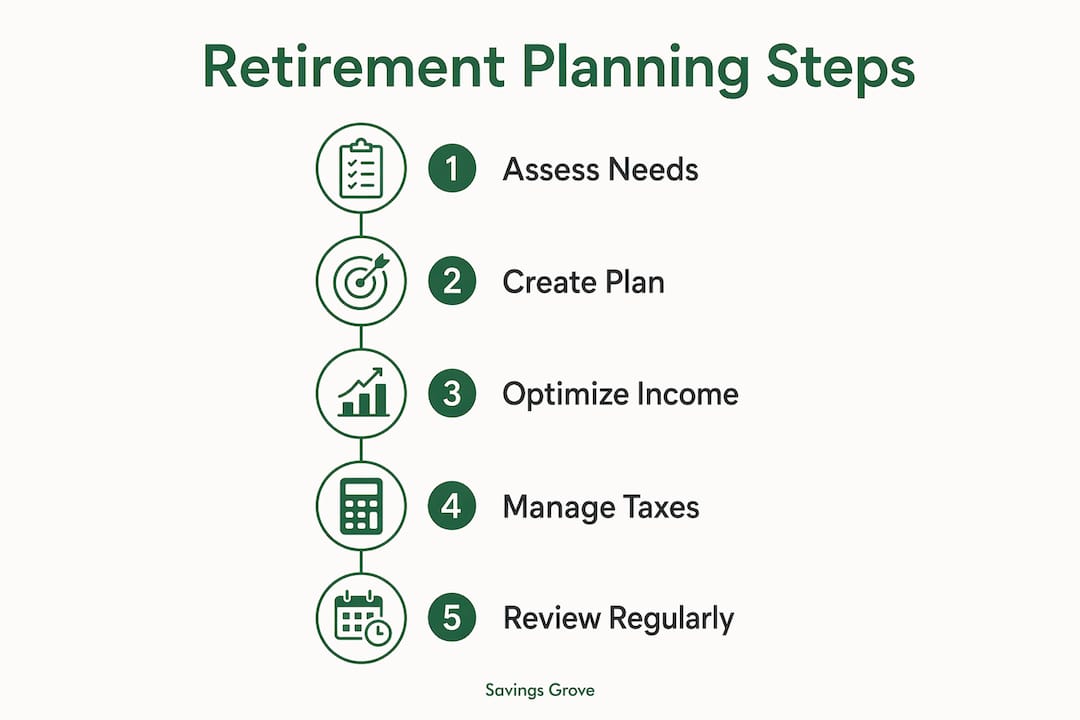
Withdrawal sequencing means drawing from your accounts in a specific order to minimize taxes each year. A common approach pulls from taxable accounts first, then tax-deferred accounts like traditional IRAs, and finally tax-free accounts like Roth IRAs. This preserves tax-free growth as long as possible and reduces your RMD burden later.
| Strategy | What it does | Why it matters |
|---|---|---|
| Withdrawal sequencing | Draws from taxable, then tax-deferred, then tax-free accounts | Minimizes annual tax liability and extends portfolio life |
| Social Security timing | Delays claiming to age 70 when possible | Increases lifetime benefit by up to 32% compared to claiming at 62 |
| Roth conversions | Converts traditional IRA funds during low-income years | Reduces future RMDs and tax exposure in later retirement |
| RMD planning | Coordinates required minimum distributions with other income | Prevents unnecessary tax bracket spikes |
| Sequence-of-returns management | Holds a cash buffer to avoid selling equities in down markets | Protects long-term growth during early retirement volatility |
Social Security timing is one of the most consequential decisions you will make. Advisors’ coordination in withdrawals and benefit timing prolongs portfolio life by several years for many retirees. Delaying Social Security to age 70 instead of claiming at 62 can significantly increase your monthly benefit for the rest of your life.
Sequence-of-returns risk is the danger that a market downturn in the first few years of retirement permanently damages your portfolio. An advisor manages this by maintaining a short-term cash reserve so you never have to sell equities at a loss to cover living expenses. Pairing this with senior investment risk management strategies gives your portfolio the best chance of lasting 25 to 30 years.
Pro Tip: If you are within five years of retirement, ask your advisor to model three scenarios: average returns, a 20% market drop in year one, and a 30% drop in year one. Seeing how each scenario plays out will clarify exactly how much risk you can afford to carry.
What questions should you ask when choosing a financial advisor?
Choosing a financial advisor for retirement planning requires more than checking credentials. The right questions reveal whether an advisor is truly qualified, transparent, and aligned with your interests.
-
Are you a fiduciary? A fiduciary is legally required to act in your best interest at all times. Confirming fiduciary status in writing and verifying fee-only compensation removes the risk of biased product recommendations.
-
What are your credentials? Look for designations like Certified Financial Planner (CFP) or Chartered Financial Analyst (CFA). These require rigorous exams and ongoing education focused on retirement planning services.
-
Can I review your Form ADV and Form CRS? Form ADV Part 2A and Form CRS are regulatory documents that disclose an advisor’s registration, disciplinary history, services, and conflicts of interest. Any registered advisor must provide these on request.
-
How many retiree clients do you currently serve? An advisor who works primarily with retirees understands the specific challenges of income distribution, healthcare costs, and longevity risk far better than one focused on wealth accumulation.
-
How often will we meet, and how do you communicate between meetings? Retirement plans need regular updates as tax laws change, markets shift, and your personal circumstances evolve. Advisors who offer quarterly reviews and proactive outreach provide the most consistent support.
-
What happens to my plan if you leave the firm? Continuity matters in a long-term advisory relationship. Knowing there is a succession plan protects you from starting over with a new advisor mid-retirement.
Interviewing multiple advisors and demanding clear written responses on fees, fiduciary duty, and conflicts is the most effective filter for finding a trustworthy advisor. Treat the process like hiring a key employee, because that is essentially what you are doing.
The importance of a financial advisor grows as your financial picture becomes more complex. Coordinating dividend income strategies alongside Social Security, RMDs, and tax planning requires someone who sees the full picture at once.
Key Takeaways
A financial advisor in retirement delivers the most value when they integrate income planning, tax strategy, and behavioral coaching into one coordinated plan rather than managing investments alone.
| Point | Details |
|---|---|
| Advisors add measurable value | Integrated planning adds 1.5%–3% net annual return, per 2024 Vanguard research. |
| Fee structures vary widely | AUM, hourly, retainer, and subscription models each suit different needs and budgets. |
| Withdrawal sequencing matters | Drawing from accounts in the right order reduces taxes and extends portfolio life significantly. |
| Fiduciary status is non-negotiable | Always confirm fiduciary commitment in writing before signing any advisory agreement. |
| Behavioral coaching is underrated | Staying invested during downturns can add up to 4.87% to long-term returns, per Fidelity. |
What I have learned from watching retirees work with advisors
By Mika L.
After years of covering personal finance, the pattern I see most often is this: retirees who struggle financially did not necessarily pick bad investments. They picked advisors who were not truly listening.
The best advisory relationships I have observed share one trait. The advisor updates the plan proactively, not just when the client calls in a panic. Tax laws change. Healthcare costs spike. A spouse passes away. A good advisor anticipates these shifts and adjusts before they become crises.
Fee negotiation is also more possible than most people realize. AUM fees are not fixed. If you bring a $500,000 portfolio to an advisor charging 1.5%, ask whether they will match the 1.0% rate that larger clients receive. Many will. That 0.5% difference compounds into tens of thousands of dollars over a 20-year retirement.
My strongest advice: do not hire the first advisor you meet. Interview at least three. Use Form ADV and Form CRS to check their disciplinary history before the first meeting. And if an advisor hesitates to confirm their fiduciary status in writing, walk away. There are plenty of qualified advisors who will not hesitate for a second.
— Mika L.
Savings Grove resources for your retirement planning
Retirement planning works best when you have both a trusted advisor and reliable educational resources backing your decisions.

Savings Grove publishes monthly updates on retirement investment strategies, fee comparisons, and income planning tools built specifically for people approaching retirement. Whether you are trying to understand how to choose a financial advisor or looking for money tips for seniors that go beyond the basics, Savings Grove gives you the research-backed context to ask better questions and make more confident choices. Visit Savings Grove to explore guides, calculators, and curated financial resources updated for 2026.
FAQ
What is the main role of a financial advisor in retirement?
A financial advisor in retirement integrates investment management, income planning, tax strategy, estate alignment, and behavioral coaching into one coordinated plan. The goal is to make your money last as long as you do.
How much do financial advisor fees for retirement typically cost?
Fees vary by model. AUM fees typically range from 0.5% to 2.0% annually, hourly rates average around $300, annual retainers average around $6,815, and subscription models average $595 per month.
What is a fiduciary financial advisor?
A fiduciary advisor is legally required to act in your best interest at all times, not just recommend “suitable” products. Always confirm fiduciary status in writing before hiring any advisor.
When should I start working with a financial planner for retirement?
Starting five to ten years before your target retirement date gives an advisor enough time to optimize Social Security timing, reduce tax exposure through Roth conversions, and build a withdrawal sequence before you need income.
What documents should I review before hiring a financial advisor?
Request Form ADV Part 2A and Form CRS from any advisor you are seriously considering. These regulatory documents disclose their services, fee structure, disciplinary history, and any conflicts of interest.
0 comments
Leave a comment
Reviewed before they appear. Your email is not shown.