

If you’re looking for wellkeptwallet.com alternatives, the strongest options are Savings Grove, Investopedia, NerdWallet, Credit Karma, Rocket Money, The Penny Hoarder, and The Balance. Each one covers budgeting, debt, or product research from a slightly different angle, so the right pick depends on what you actually need.
Here’s the quick shortlist:
- Savings Grove — Best for curated credit card deals, monthly-updated money tips, and practical guides on homeownership and debt
- Investopedia — Best for deep financial education, definitions, and expert-reviewed investing content
- NerdWallet — Best for side-by-side product comparisons (credit cards, loans, bank accounts)
- Credit Karma — Best for free credit monitoring and personalized product matches
- Rocket Money (formerly Truebill) — Best for subscription tracking and automated bill negotiation
- The Penny Hoarder — Best for everyday money-saving ideas and income-boosting tips
- The Balance — Best for structured, beginner-friendly guides on budgeting and personal finance basics
Use this list as your starting point. The sections below break down how they compare side by side, what each one actually covers, and how to pick the right one for your goals.
Table of Contents
- What are the best wellkeptwallet.com alternatives in 2026?
- Profiles of each alternative: what they cover and who they fit
- How do you choose the right personal finance resource?
- How do reputable finance sites verify their advice?
- Which alternative should you try first?
- How do these sites compare on community and engagement features?
- How often do these sites update their content?
- What does the mobile experience look like beyond having an app?
- Which sites cover diverse financial situations?
- Key Takeaways
- What most people miss when switching finance sites
- Savings Grove covers what you’re actually looking for
- Authoritative sources and further reading
What are the best wellkeptwallet.com alternatives in 2026?
| Site | Best for | Primary topics | Free tools | Editorial credibility | Content depth | Mobile app | Monetization/bias risk |
|---|---|---|---|---|---|---|---|
| Savings Grove | Curated deals, debt, homeownership | Credit cards, investing, budgeting, savings | Yes (calculators, guides) | Monthly fact-checked updates | Beginner to intermediate | No dedicated app | Affiliate links, disclosed |
| Investopedia | Financial education, definitions | Investing, taxes, economics, budgeting | Yes (calculators, simulator) | CFP/CFA review board | Intermediate to advanced | Yes | Affiliate links, ads |
| NerdWallet | Product comparisons | Credit cards, loans, banking, insurance | Yes (calculators) | Licensed financial writers | Beginner to intermediate | Yes | Affiliate commissions |
| Credit Karma | Credit monitoring | Credit scores, loans, tax filing | Yes (credit score, tax tool) | Editorial team, no CFP board listed | Beginner | Yes | Lead generation |
| Rocket Money | Subscription management | Budgeting, bill negotiation, subscriptions | Yes (budget tracker) | Editorial team | Beginner | Yes | Freemium, premium tier |
| Mint (Intuit) | Free budget tracking | Budgeting, spending, credit | Yes (account aggregation) | Intuit editorial team | Beginner | Yes | Ads, product offers |
| The Penny Hoarder | Side income, saving tips | Frugal living, gig economy, couponing | Limited | Staff writers, some expert contributors | Beginner | No | Affiliate links, ads |
| The Balance | Structured learning | Budgeting, debt, investing basics | Limited | Expert contributors, fact-checked | Beginner to intermediate | No | Affiliate links, ads |
Reading the monetization column: Every site on this list earns money somehow. Affiliate links are not inherently bad, but they do create an incentive to recommend products that pay commissions. Sites that disclose this clearly and maintain an independent editorial process are far more trustworthy than those that bury it. When a site’s top-ranked credit card happens to carry the highest affiliate payout, that’s worth noticing.
Pro Tip: Filter by the “Free tools” column first if your immediate goal is tracking spending or running numbers. Then check editorial credibility before acting on any tax or investment advice.
Profiles of each alternative: what they cover and who they fit
Savings Grove
Savings Grove publishes monthly-updated guides on credit card rewards, investment opportunities, homeownership savings, and student debt. The content is fact-checked and practical, written for readers who want clear recommendations rather than academic overviews. It covers a financial dictionary, retirement strategies, and curated product deals, making it useful whether you’re just starting out or refining an existing money plan.
It fits readers who want one place for both educational content and vetted product suggestions. Affiliate links are present and disclosed. Personal finance software picks and budgeting fundamentals are among its most useful starting points.
Investopedia
Investopedia is the go-to source when you need a reliable definition or a thorough explanation of a financial concept. Its review board includes CFP and CFA contributors, and most major articles carry visible revision dates. The depth skews toward investing and economics, so it’s less useful for everyday budgeting tactics but excellent for understanding the “why” behind financial decisions.
NerdWallet
NerdWallet excels at product comparison. If you need to find the best balance-transfer card or the highest-yield savings account, its comparison tables are hard to beat. The site is transparent about earning commissions, and its editorial team is separate from its business side. The trade-off: content is optimized around product categories, so broader financial strategy is thinner here.
Credit Karma
Credit Karma gives you free credit score monitoring and personalized loan or card recommendations based on your credit profile. It’s genuinely useful for tracking credit health over time. The business model is lead generation, meaning recommendations are matched to your profile but also to available partner offers. Use it for credit monitoring; verify product picks elsewhere before applying.
Rocket Money
Rocket Money (formerly Truebill) focuses on what you’re already spending. It scans linked accounts for recurring subscriptions, flags ones you may have forgotten, and can negotiate bills on your behalf. Mint offers similar free account aggregation with broader budgeting features. Both connect to bank accounts via services like Plaid, so check each app’s data-sharing and encryption policies before linking your accounts.
The Penny Hoarder
The Penny Hoarder targets readers who want practical, low-effort ways to save or earn more. It covers gig economy opportunities, couponing, and frugal living tips. The tone is accessible and encouraging, which makes it a good fit for beginners. Editorial depth on investing or debt strategy is limited, but for day-to-day money habits it delivers consistent, readable content.
The Balance
The Balance structures its content like a textbook, walking readers through budgeting, debt payoff, and investing basics in a logical sequence. Expert contributors and visible fact-checking make it reliable for foundational learning. It’s less useful once you move past the basics, but for someone building their first budget or understanding debt-to-income ratios, it’s a strong starting point. Savings Grove’s beginner budgeting guide covers similar ground with a more conversational approach.
How do you choose the right personal finance resource?
Match the resource to your goal before anything else. Here’s a practical checklist:
- Investopedia
- Semrush — wellkeptwallet.com competitors
- XRanks — Top alternatives to Wellkeptwallet.com
- Plaid — data and privacy overview
- You Need A Budget (YNAB)
- Mint — Budget Tracker & Planner | Free Online Money Management
- 9 Top Personal Finance Software Picks (2026) – Savings Grove
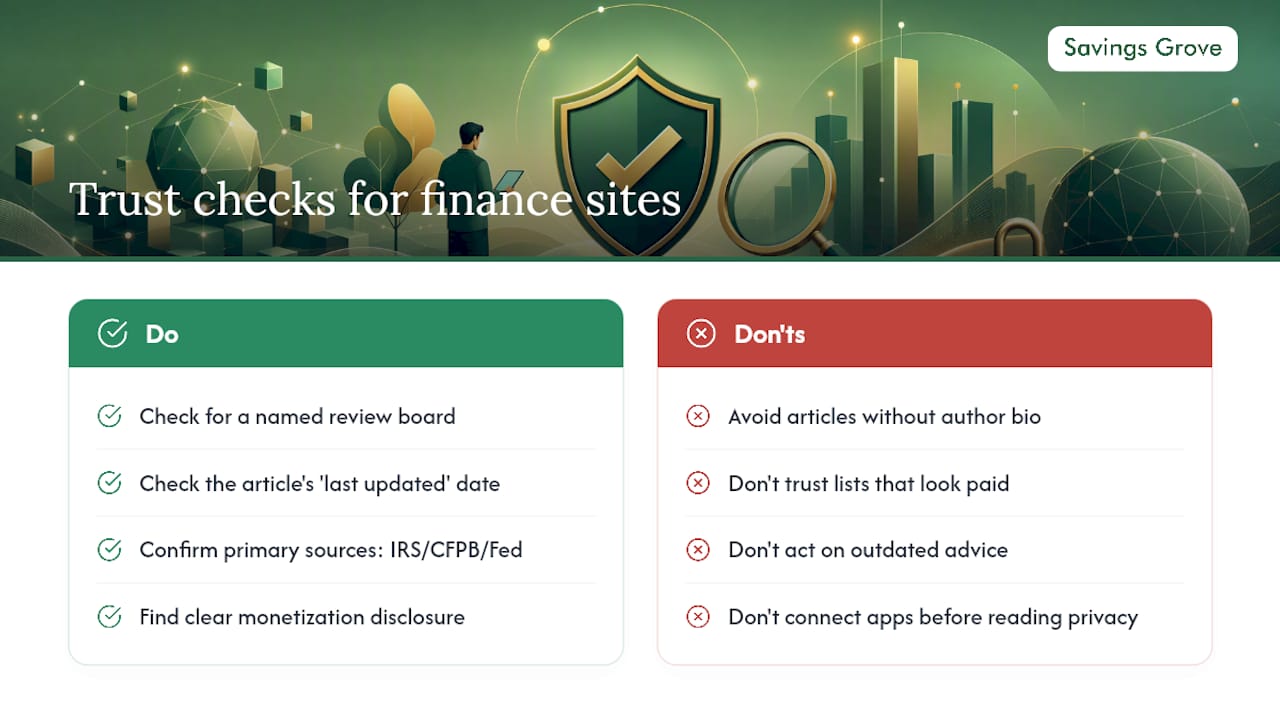
Red flags to watch for: no author name on financial articles, product rankings that never change, no visible update dates, and affiliate disclosures buried in footers rather than near the recommendations themselves.
How do reputable finance sites verify their advice?
The clearest trust signal is a named financial review board. Investopedia uses CFP and CFA contributors to review articles before publication, a standard that separates it from most personal finance blogs. Sites that meet this bar typically also show revision dates on every article, cite primary sources (IRS, CFPB, Federal Reserve), and publish a clear methodology page explaining how products are selected and ranked.
Date-stamped updates matter more than most readers realize. A budgeting article written before recent Federal Reserve rate changes may recommend savings account strategies that no longer apply. Always check the “last updated” line before acting on rate-sensitive advice.
Transparent monetization is the third pillar. A site can earn affiliate income and still be trustworthy, but only if the disclosure is prominent and the editorial process is independent. When a site’s “best of” list reads like a paid placement, it usually is.
Pro Tip: Scroll to the author bio on any article covering taxes or investing. If there’s no bio, no credentials, and no review board listed, treat the content as a starting point for research, not a final answer.
Apps that connect to your bank accounts add another layer to consider. Services using Plaid for bank linking use tokenized access rather than storing your login credentials, but you should still review each app’s privacy policy and data-sharing terms before connecting.
Which alternative should you try first?
Match your goal to the right starting point:
- Building your first budget: Start with Savings Grove’s budgeting basics guide or The Balance for structured, step-by-step guidance.
- Paying off debt faster: YNAB teaches a behavioral method (assigning every dollar a job) that works well for debt-focused readers. Savings Grove’s debt guides complement it with product-level recommendations.
- Tracking subscriptions and cutting bills: — Rocket Money or Mint for automated tracking and account aggregation.
- General financial education: — Investopedia for definitions and concept depth; Savings Grove for practical, regularly updated guides on a wide range of money topics.
How do these sites compare on community and engagement features?
Community features vary more than most readers expect. NerdWallet and Credit Karma both offer user comment sections and personalized dashboards that update with your financial data. Rocket Money and Mint lean into app-based engagement, sending push notifications and weekly spending summaries to keep you active.
The Penny Hoarder has a strong social media presence and an email newsletter with a large subscriber base, which functions as its primary community layer. The Balance and Investopedia are more reference-oriented, with minimal community interaction but strong email newsletters for ongoing learning.
Savings Grove publishes a regularly updated blog with guides across credit, investing, and budgeting, and its content is structured for readers who return monthly to check for new deals and updated product lists. For readers who want money tips for living paycheck to paycheck, that kind of consistent, practical output is more useful than a forum.
How often do these sites update their content?
Update frequency is one of the most overlooked quality signals. Investopedia and NerdWallet both maintain large editorial teams and update high-traffic articles on a rolling basis, often within days of a rate change or regulatory update. Credit Karma updates credit score data weekly for most users.
Savings Grove publishes monthly updates on financial products and strategies, which keeps its credit card roundups and investment guides current without overwhelming readers with daily noise. The Penny Hoarder publishes frequently but focuses more on evergreen tips than time-sensitive rate data.
The Balance has slowed its publishing cadence in recent years, though its foundational articles remain accurate. If you’re relying on any site for rate-sensitive information (APYs, APRs, tax brackets), always cross-reference with the primary source before acting.
What does the mobile experience look like beyond having an app?
Having a mobile app and having a good mobile experience are two different things. Credit Karma and Rocket Money both offer polished, app-first experiences with intuitive dashboards. Mint’s app provides account aggregation and spending charts that work well on a small screen.
NerdWallet’s app is functional but its real strength is still the desktop comparison tables, which are harder to navigate on mobile. Investopedia’s mobile site is readable but dense; it’s better suited to focused reading sessions than quick lookups.
Savings Grove, The Penny Hoarder, and The Balance are web-first resources. Their sites are mobile-responsive, meaning articles and guides read cleanly on a phone, but there’s no dedicated app. For readers who prefer browser-based reading over app notifications, that’s often a feature rather than a limitation.
Which sites cover diverse financial situations?
Most mainstream personal finance sites default to a 30-something professional with a stable income. The sites that go further are worth noting.
The Penny Hoarder consistently covers gig workers, single parents, and readers with irregular income. Savings Grove publishes audience-specific guides for single parents, retirees, college students, and teens, making it one of the broader resources for demographic-specific advice. Aggregator directories like XRanks can help you find niche blogs that specialize by audience, such as student-focused or retirement-focused sites, though you’ll need to apply your own credibility checks once you find them.
Investopedia covers retirement planning and tax strategy in depth, making it useful for older readers or those approaching major financial transitions. Credit Karma skews younger, with content and product recommendations that fit readers building credit for the first time.
Key Takeaways
The strongest personal finance resources combine editorial credibility, free tools, and transparent monetization. Savings Grove, Investopedia, and NerdWallet each deliver on at least two of those three dimensions, making them the most reliable starting points among the alternatives reviewed here.
| Point | Details |
|---|---|
| Match site to goal | Debt payoff, budgeting, and product research each point to different resources. |
| Check credentials | Look for CFP/CFA contributors and visible revision dates before acting on tax or investment advice. |
| Verify monetization | Prominent affiliate disclosures and independent editorial processes are the clearest trust signals. |
| Use free tools carefully | Run a known scenario through any calculator before relying on it for a real financial decision. |
| Savings Grove fits most goals | Monthly-updated guides, curated product deals, and audience-specific content make it a practical starting point. |
What most people miss when switching finance sites
The conversation around personal finance resources almost always focuses on which site has the most content or the best-known brand. That framing misses the more useful question: which site is honest about how it makes money?
Every site on this list earns revenue somehow. Affiliate commissions, lead generation, and advertising are all legitimate business models. The problem isn’t the model; it’s when the model quietly shapes the editorial output without disclosure. A credit card ranked first because it pays the highest commission is not the same as a credit card ranked first because it’s the best fit for most readers. Those two things can look identical on the page.
The sites that handle this well, Investopedia and Savings Grove among them, keep their editorial and commercial operations visibly separate and disclose relationships near the recommendations themselves, not buried in a footer. That’s the standard worth holding every resource to, including this one.
Savings Grove covers what you’re actually looking for
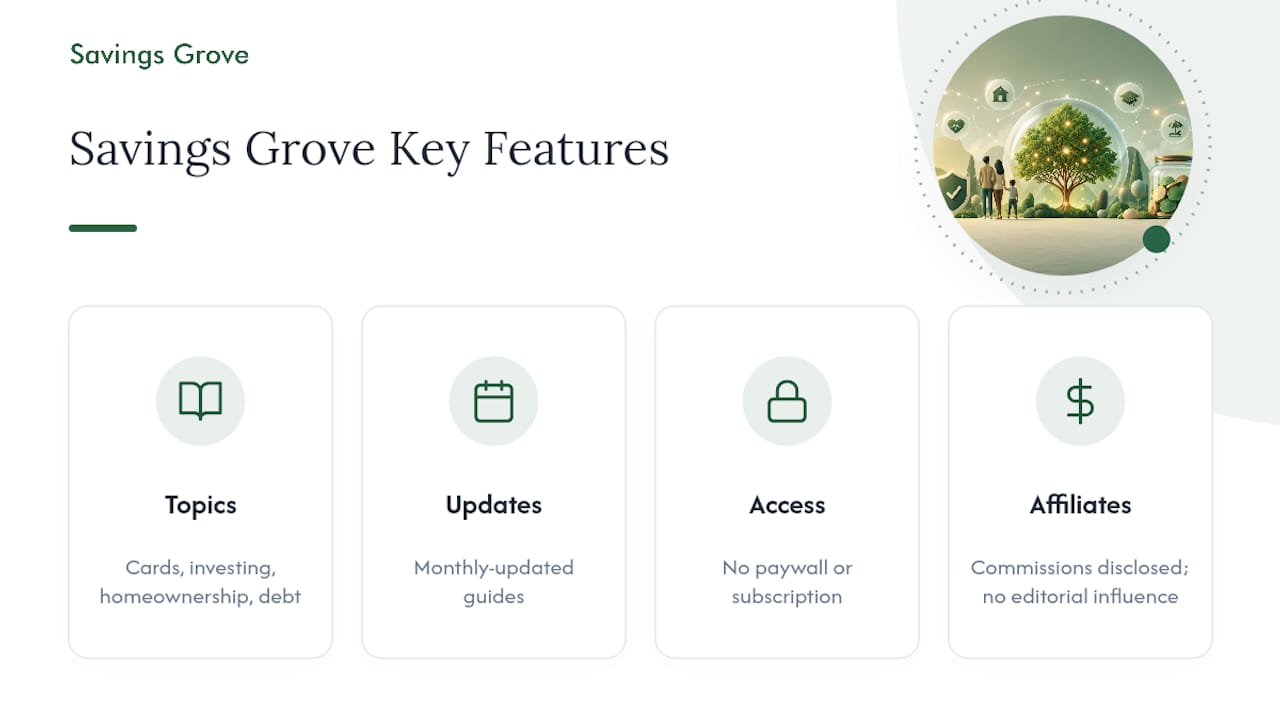
Most personal finance sites make you choose between educational depth and practical product guidance. Savings Grove does both. You get monthly-updated credit card roundups, investment guides, homeownership savings tips, and debt management strategies, all fact-checked and written in plain language. There’s no paywall and no subscription required.
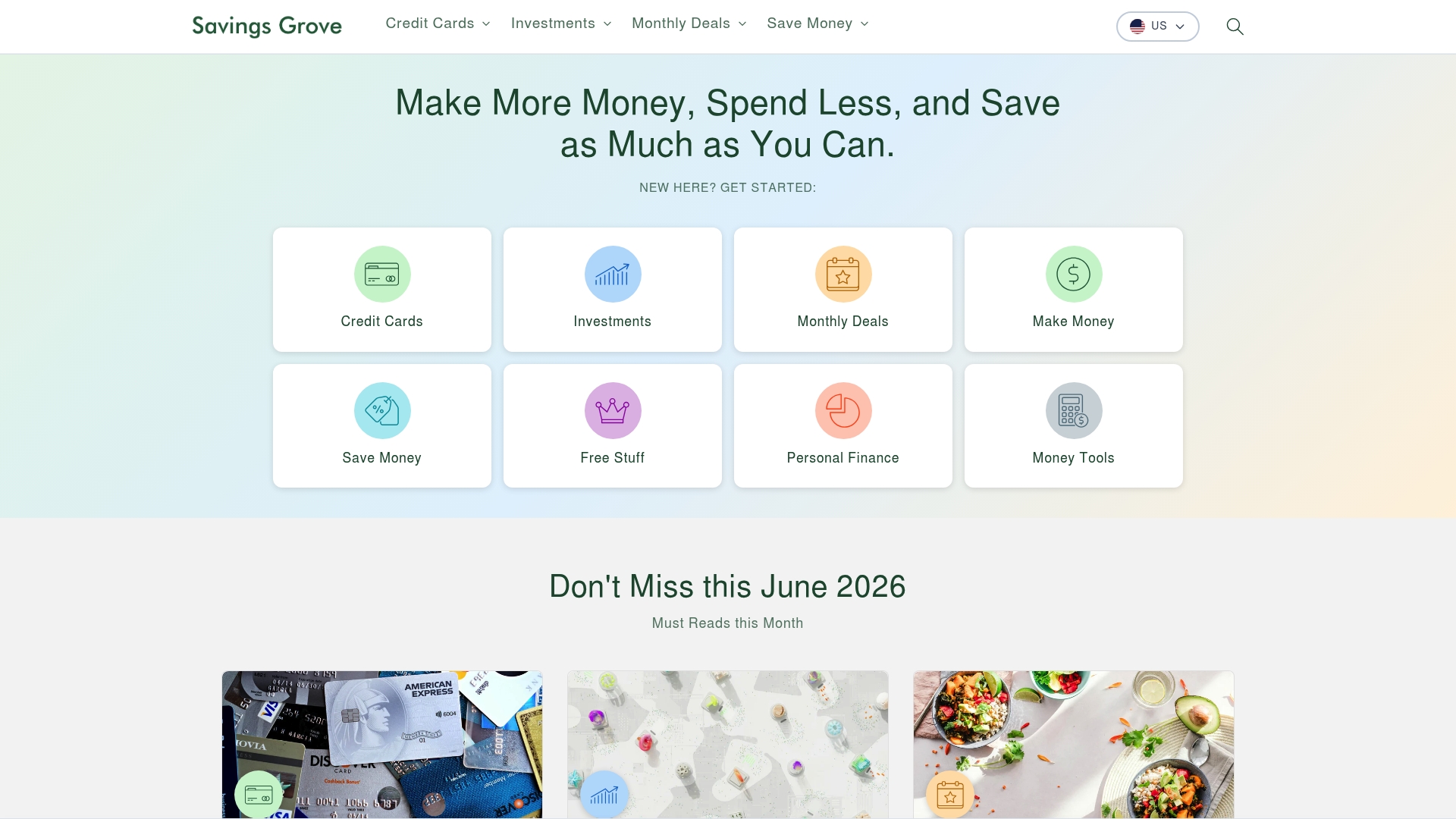
Whether you’re working through your first budget, comparing credit card rewards, or looking for smart money tips for young adults, Savings Grove keeps its guides current and its recommendations transparent. Affiliate relationships are disclosed on every relevant page. Visit Savings Grove to browse guides by topic and find the resources that fit your financial situation right now.
Disclosure: Savings Grove earns affiliate commissions from some product recommendations. This does not influence editorial rankings or content.
This article is general information, not professional financial advice. Confirm current rates, rules, and product terms with the relevant institution or a qualified financial professional before making decisions.
Authoritative sources and further reading
- Investopedia — Financial definitions, investing guides, and expert-reviewed articles; the strongest free resource for understanding complex financial concepts.
- Semrush — wellkeptwallet.com competitors — Traffic and competitor analysis for wellkeptwallet.com; useful for understanding the broader landscape of similar personal finance sites.
- XRanks — Top alternatives to Wellkeptwallet.com — Curated directory of alternative personal finance blogs; good for discovery, but apply your own credibility checks before trusting any recommendation.
- Plaid — data and privacy overview — Explains how bank-linking works in budgeting apps; read this before connecting any financial account to a third-party tool.
- You Need A Budget (YNAB) — The leading behavioral budgeting resource; best for readers who want a structured, method-driven approach to debt payoff.
- Mint — Budget Tracker & Planner — Free account aggregation and budget tracking; a practical starting point for readers who want automated spending visibility.
- 9 Top Personal Finance Software Picks (2026) — Savings Grove — Savings Grove’s curated list of personal finance software; useful for readers who want tool recommendations alongside blog resources.
- Best AccountantsNow.com Alternatives for Your Business — A related guide covering alternatives in the financial-services space; relevant if you’re also researching business or accounting resource options.