

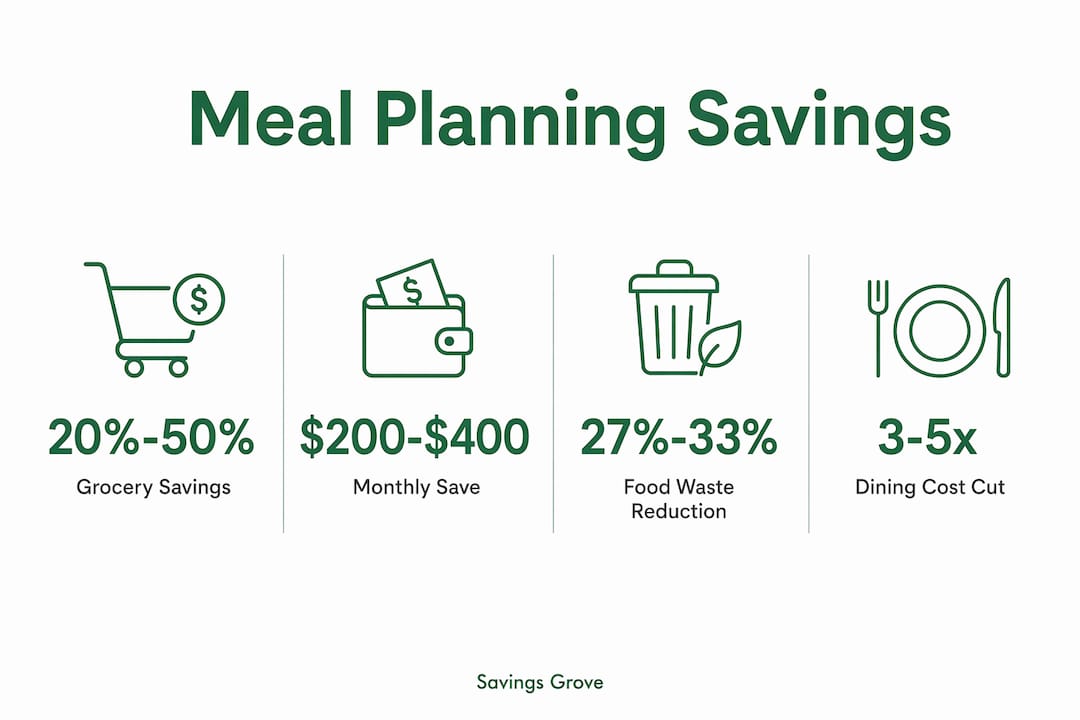
Meal planning is defined as the deliberate scheduling of meals ahead of time to control grocery spending and reduce food waste. The role of meal planning savings goes well beyond clipping coupons. Consistent meal planning can reduce grocery bills by 20% to 50%, saving families $200 to $400 every month and up to $4,800 annually. That is real money that stays in your household budget instead of disappearing into overpriced takeout or spoiled produce. Savings Grove covers strategies like this because small, repeatable habits produce the largest long-term financial gains.
How does meal planning save money on groceries and reduce food waste?
Meal planning saves money by shifting your shopping from reactive to intentional. When you walk into a store without a plan, you buy based on what looks good or what is on sale, not what you actually need. That pattern leads to overbuying, forgotten ingredients, and wasted food.

A targeted shopping list is the first mechanism. You buy only what your planned meals require, which prevents the “just in case” purchases that pile up and expire. Structured meal planning reduces household food waste by 27% to 33%. That reduction translates directly into lower weekly grocery bills.
Matching purchase quantities to expected consumption is the second mechanism. If your plan calls for one bunch of kale used across three dinners, you buy one bunch. Without a plan, you might buy two and use half. Planning meals around overlapping ingredients, like using one rotisserie chicken across tacos, soup, and a grain bowl, maximizes every dollar spent.
- Targeted shopping lists prevent overbuying by anchoring purchases to specific recipes.
- Ingredient overlap across multiple meals reduces the number of unique items you need to buy.
- Designated “use first” zones in your fridge keep near-expiry items visible so nothing gets forgotten.
- Bulk buying works best when paired with a plan. Buying in bulk saves up to 25% on unit prices, but only when you have a clear plan to use the quantity purchased.
- Near-expiry produce bought at a discount and used within 24 hours is as nutritious and safe as full-price items.
Pro Tip: Place a small labeled bin or basket on the most visible shelf of your fridge. Put anything expiring within two days in that bin. Cook from it first, every time.
What common strategies maximize meal planning cost benefits?
The most effective meal planning strategies combine structure with flexibility. Rigid plans fail because life is unpredictable. The goal is a system that bends without breaking.
-
Batch cook on one or two days per week. Prepare large portions of proteins, grains, and roasted vegetables. Store them in labeled containers. You then assemble meals in minutes on busy nights instead of ordering delivery.
-
Schedule one or two “leftover nights” per week. Flexible leftover nights prevent plan abandonment when schedules shift. They also clear the fridge before the next shopping trip, which cuts waste directly.
-
Shop once per week with a complete list. Multiple trips to the store increase impulse spending. A single weekly shop with a written list keeps you focused and reduces the chance of buying items you do not need.
-
Build meals around sales and seasonal produce. Check your store’s weekly circular before writing your meal plan, not after. Seasonal vegetables cost less and taste better. Cheap protein sources like dried beans, lentils, and eggs deliver nutrition at a fraction of the cost of meat.
-
Assign prep tasks to specific days. Sunday for batch cooking, Wednesday for a quick fridge audit. Consistency builds the habit, and the habit produces the savings. Families who treat meal prep like a recurring appointment stick with it far longer than those who try to fit it in whenever.
Pro Tip: Write your meal plan before you check what is in your fridge, then cross-reference. You will often find ingredients already on hand that can anchor two or three meals, cutting your shopping list significantly.
Families who apply these strategies consistently report that their grocery budget becomes one of the most controllable line items in their monthly expenses.
How does meal planning cut expensive dining out and takeout costs?
A home-cooked meal costs 3 to 5 times less than the equivalent restaurant or delivery order. That gap is the core financial argument for meal prep. A delivery meal often runs $35 to $50 per instance when you include fees, tips, and service charges. Avoiding two delivery orders per week saves $280 to $400 monthly. Over a year, that is $3,360 to $4,800 back in your pocket.
The mechanism is not just cost comparison. It is decision fatigue. When you arrive home tired and hungry with no plan, the path of least resistance is a delivery app. Meal prepping reduces last-minute decisions, which prevents the impulsive, expensive food purchases that decision fatigue produces. A fridge stocked with ready-to-eat components removes the temptation entirely.
- Ready-made backup meals in the freezer serve as your personal fast food. Pull out a pre-cooked portion instead of opening a delivery app.
- Visible, accessible food in the fridge reduces the mental effort of cooking. When the chicken is already cooked and the vegetables are already chopped, assembly takes ten minutes.
- Planned variety prevents boredom, which is one of the top reasons people abandon meal plans and resort to restaurants.
The psychological shift matters as much as the practical one. When you know dinner is already handled, you stop seeing takeout as a solution to a problem. It becomes an occasional choice rather than a daily default.
What expert techniques boost your meal prep savings even further?
Advanced meal planning goes beyond writing a weekly menu. These techniques separate households that save moderately from those that cut their food spending dramatically.
Use a dedicated “use first” fridge section. Professional planners designate a visible shelf for near-expiry items. This physical boundary does what written lists cannot: it puts the food in your line of sight every time you open the fridge. You cook what needs to be used, not what is easiest to reach.
Buy slightly bruised or near-expiry produce at a discount. Many grocery stores mark down produce that is cosmetically imperfect but nutritionally identical to full-price items. Buy it, use it within 24 hours, and pay significantly less. This technique works especially well for items you plan to cook, like soups, stir-fries, or roasted dishes, where appearance does not matter.
Build in flexible meals. A “clean out the fridge” stir-fry or grain bowl at the end of the week uses whatever is left. This single habit prevents the most common source of food waste: the forgotten half-used vegetables that spoil before the next shopping trip.
- Stage your prep gradually. Start by prepping just one or two components, like cooked grains or washed vegetables. Small-scale meal prepping has a significant positive impact on food spending and stress, even before you reach full weekly planning.
- Share bulk purchases with a neighbor or friend. Splitting a large bag of rice or a case of canned tomatoes cuts the unit cost without requiring you to store an impractical quantity.
- Track your wins. Write down what you spent before and after starting meal planning. Seeing the actual dollar difference each month reinforces the habit better than any motivation tip.
Pro Tip: Keep a running “pantry inventory” note on your phone. Update it when you buy or use staples. This prevents duplicate purchases and helps you build meals around what you already own.
The frugal living approach to meal planning treats the kitchen as a financial tool, not just a place to cook.
Key Takeaways
Meal planning is the single most accessible way for families to cut grocery bills, reduce food waste, and eliminate costly last-minute takeout spending.
| Point | Details |
|---|---|
| Grocery savings are significant | Consistent planning cuts grocery bills by 20%–50%, saving up to $4,800 annually. |
| Food waste drops with structure | Planned shopping and “use first” fridge zones reduce household food waste by 27%–33%. |
| Takeout costs fall sharply | Skipping two delivery orders per week saves $280–$400 every month. |
| Flexibility prevents plan failure | Scheduling one or two leftover nights per week keeps the plan sustainable long-term. |
| Small steps produce real results | Prepping even one or two components ahead of time meaningfully reduces food spending and stress. |
What meal planning actually taught me about spending
I used to think meal planning was for people who had extra time and energy. I was wrong. The first week I planned five dinners in advance, I spent $60 less at the grocery store than the week before. I had not changed what I ate. I had changed how I bought.
The biggest surprise was how much money I had been losing to indecision. On nights when I had no plan, I ordered delivery or grabbed something expensive and convenient. That pattern was costing me more than I realized. Once I had a fridge stocked with prepped components, the delivery app stopped feeling necessary.
What I tell people who are just starting out: do not try to plan every meal for the week on your first attempt. Plan three dinners. Prep one batch of grains. See what happens to your grocery bill. The results will motivate you to do more the following week.
The other thing I learned is that flexibility is not a weakness in a meal plan. It is a feature. The weeks my plan fell apart were the weeks I had no leftover nights built in. When I added one or two flexible nights, the plan held together even when my schedule did not.
Meal planning is not about perfection. It is about giving yourself a default that costs less and wastes less than the alternative. That default compounds over months into hundreds of dollars saved. Start small, track the difference, and build from there.
— Mika L.
How Savings Grove supports your meal planning budget goals
Cutting your grocery bill and reducing food waste are two of the fastest ways to free up cash in your monthly budget. Savings Grove brings together research-backed strategies, updated financial tools, and practical guides to help you make that happen.
Whether you are just starting to plan meals or looking to sharpen a system you already use, Savings Grove offers resources that connect smart food habits to broader financial goals. From maximizing household savings to finding the best ways to stretch every dollar, the site gives you clear, practical guidance without the fluff. Explore the tools and guides at Savings Grove to put your grocery budget to work for your financial future.
FAQ
How much can meal planning save per month?
Meal planning saves families $200 to $400 per month on groceries, with annual savings reaching up to $4,800. Results vary based on household size and current spending habits.
Can meal planning really reduce food waste?
Yes. Structured meal planning reduces household food waste by 27% to 33%, primarily by matching purchases to planned consumption and keeping near-expiry items visible.
How does meal planning reduce takeout spending?
A home-cooked meal costs 3 to 5 times less than a restaurant or delivery equivalent. Avoiding two delivery orders per week saves $280 to $400 monthly, according to cost comparisons of home cooking versus delivery.
What is the easiest way to start meal planning on a budget?
Start by planning three dinners per week and writing a shopping list based only on those meals. Small-scale prepping, even just cooking grains or washing vegetables in advance, reduces both spending and stress immediately.
Does buying in bulk help with meal planning savings?
Bulk buying saves up to 25% on unit prices and works best when paired with a clear meal plan. Without a plan, bulk purchases often lead to waste rather than savings.
0 comments
Leave a comment
Reviewed before they appear. Your email is not shown.