

A budget is a written plan that shows how you’ll spend and save your money each month. According to consumer.gov, a budget shows you how much money you make and how you spend it, helping you make sure you’ll have enough before your next paycheck. Think of it as a financial roadmap: it doesn’t restrict your life, it gives you clarity over it.
A personal budget covers three core components:
- Income: All money coming in, including wages, side income, and benefits
- Expenses: Everything you spend, from rent and groceries to subscriptions and dining out
- Savings: The portion you set aside for goals, emergencies, or retirement
Budgeting applies to people at every income level. Regardless of your income level, a budget helps you manage money effectively and avoid the stress of running short. Nearly 9 in 10 Americans report using a budget, yet fewer than 1 in 4 stick with it consistently. The gap usually comes down to one thing: the plan wasn’t flexible enough to survive real life.
How to create a personal budget that actually works
Building a budget doesn’t require a finance degree or a complicated spreadsheet. Follow these steps to get started.
-
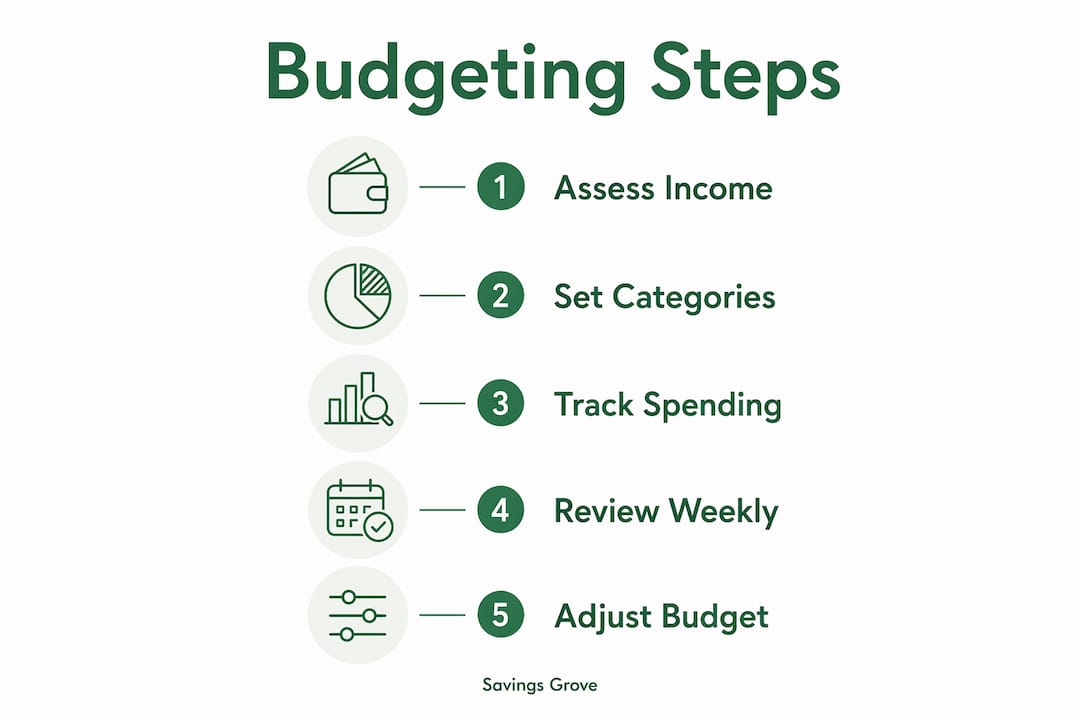
Add up your income. List every source of money you receive each month after taxes. Include your paycheck, freelance work, government benefits, or any other regular income. If your income varies, use your lowest earning month from the past year as your baseline to keep things conservative and realistic.
-
Track your current spending. Pull up your last two or three bank statements and write down what you actually spent. Most people are surprised by what they find, especially in categories like food delivery and subscriptions.
-
Sort expenses into three buckets. Label each expense as a need (rent, utilities, groceries), a want (streaming services, dining out), or savings (emergency fund, retirement). This separation is the foundation of most budgeting frameworks.
-
Choose a budgeting method. Pick a structure that fits your lifestyle. The 50/30/20 rule splits income into 50% needs, 30% wants, and 20% savings. Zero-based budgeting assigns every dollar a job until your income minus expenses equals zero. Reverse budgeting moves savings out first, then covers everything else with what remains.
-
Set spending limits for each category. Based on your income and priorities, assign a dollar amount to each bucket. Be honest. Setting an unrealistically low grocery budget just means you’ll blow it by week two.
-
Pick your tracking tool. A simple spreadsheet works fine. Free apps like Goodbudget or a basic Google Sheets template keep things organized without added cost.
-
Review it weekly at first. Spending 15–30 minutes each week reviewing your numbers builds the habit without overwhelming you.
Pro Tip: Financial advisor Seiler recommends starting with short reviews of 15 to 30 minutes weekly rather than attempting a full financial overhaul at once. Treat budgeting like a training program: small, consistent reps beat one exhausting session.

How to stick to your budget and adjust it over time
Creating a budget is the easy part. Keeping it going is where most people struggle, and that’s completely normal.

Check your spending at least once a week, especially in the first month. You don’t need to track every penny. Grouping expenses into broad categories, sometimes called “budgeting to your buckets,” makes the process sustainable and reduces the burnout that comes from obsessing over small amounts.
Life changes, and your budget should too. A raise, a new baby, a job loss, or a medical bill all shift your financial picture. When that happens, revisit your categories and adjust the numbers. A budget that doesn’t bend will break.
Key habits that help you stay on track:
- Automate your savings. Set up an automatic transfer to your savings account on payday. Treating savings like a fixed monthly bill prevents lifestyle creep, where spending quietly rises as income grows.
- Build in a buffer. Leave a small cushion in your checking account for unexpected costs so one surprise doesn’t derail the whole plan.
- Talk about it. For households, open money conversations reduce financial stress and keep everyone aligned on shared goals.
- Give yourself a spending category. A “fun money” line item isn’t a luxury. It’s what keeps you from abandoning the budget entirely.
Pro Tip: If you feel overwhelmed, pull back to just three categories: needs, wants, and savings. You can always add more detail later once the habit is solid. Explore proven budgeting tips from Savings Grove to build on the basics.
Which budgeting method fits your financial priorities?
No single budgeting method works for everyone. The right choice depends on your income type, your goals, and how much detail you can realistically manage. Financial educator Julie Beckham puts it clearly:
“Identifying your personal financial priorities is the most critical first step before budgeting. Your priorities may differ from what society tells you they should be, but they give your budget real purpose and keep you motivated to stick with it.”
— Julie Beckham, financial educator, via Experian
Here’s how the three most popular methods compare:
| Method | Structure | Best for |
|---|---|---|
| 50/30/20 rule | 50% needs, 30% wants, 20% savings | Beginners who want a simple starting framework |
| Zero-based budgeting | Every dollar assigned until income minus expenses equals zero | Detail-oriented people who want full control |
| Reverse budgeting | Savings transferred first; remainder covers expenses | Those focused on long-term goals like retirement |
For long-term goals, the numbers matter. Aiming to save roughly 15% of your pre-tax income starting in your 20s puts you on track for a comfortable retirement. Budgeting is the practical tool that makes that possible by showing you exactly where the money is going and where it can be redirected.
If your income varies month to month, reverse budgeting or zero-based budgeting tend to work better than the 50/30/20 rule, since both force you to plan from the actual dollars you have. For freelancers or gig workers, building your budget around your lowest earning month in the past year keeps you covered even when work slows down. You can find more tailored guidance in Savings Grove’s retirement budget strategies for adjusting plans as your financial situation evolves.
Key Takeaways
A budget is a written monthly plan that gives every dollar a purpose, and flexible budgeting methods are what separate people who stick with it from those who don’t.
| Point | Details |
|---|---|
| A budget is a written plan | It tracks income, expenses, and savings to give you control over your money each month. |
| Start with your real numbers | Use actual bank statements and, for variable income, your lowest monthly earnings from the past year. |
| Choose a method that fits you | The 50/30/20 rule, zero-based, and reverse budgeting each suit different lifestyles and goals. |
| Automate savings first | Treating savings like a fixed bill prevents lifestyle creep and builds wealth steadily over time. |
| Review and adjust regularly | Life changes require budget changes; weekly check-ins build the habit without causing burnout. |
0 comments
Leave a comment
Reviewed before they appear. Your email is not shown.