

An escrow account is a fund your mortgage servicer manages on your behalf to pay property taxes and homeowners insurance when they’re due. Most fixed monthly mortgage payments include an escrow portion on top of principal and interest, so those bills get paid automatically instead of landing on you as separate lump sums. Federal rules cap how much a lender can collect into this account, so it can’t quietly build up more than it needs.
TL;DR:
- Most escrow accounts cover property taxes and homeowners insurance, with cushions capped at one-sixth of annual disbursements under federal rules.
- Annual escrow analysis compares actual tax and insurance costs with projections, revealing shortages or surpluses that affect your next payments.
- Changes in property tax assessments or insurance premiums can cause your escrow payments to fluctuate, requiring you to adjust or address shortages promptly.
- Escrow removal depends on loan type and equity, with conventional loans more flexible than FHA or VA loans, and usually requiring a minimum of 20% equity.
- Regularly reviewing your escrow statement and monitoring your account can prevent surprises, and you can self-manage payments with a savings account if you waive escrow.
Table of Contents
- How Escrow Account Funding Works on a Mortgage
- Escrow Analysis: The Annual Review That Keeps Your Account Accurate
- What Escrow Typically Covers (and What It Doesn’t)
- Why Your Payment Changes and How to Handle Shortages or Surpluses
- When You Can Waive or Remove Escrow
- Your Rights Under RESPA and Federal Escrow Rules
- Monitoring Your Escrow: Practical Steps
- Is Escrow Worth It? An Editorial Take
- Where to Go for More Homeowner Budgeting Help
- Sources
- FAQ
How Escrow Account Funding Works on a Mortgage
Your servicer estimates your annual property taxes and homeowners insurance premium, adds them together, then divides by 12. That number becomes your monthly escrow contribution, and it gets added to your principal and interest payment every month.
Most servicers also collect a cushion, an extra buffer to cover rising costs or timing gaps between when money comes in and when bills go out. Federal rules cap that cushion at one sixth of your annual escrow disbursements, so a servicer can’t pad the account indefinitely.
At closing, you’ll typically fund the account upfront with a deposit covering several months of taxes and insurance before your first regular payment even starts. Here’s how the math plays out in practice:
- Example one: Your annual property tax plus annual insurance is added together, then divided by 12 to determine your monthly escrow payment.
- Example two: Your annual tax plus insurance amounts are summed and divided by 12 to give your monthly escrow payment before any cushion is added.
Lenders pull these estimates from closing documents, local tax assessor records, and your insurance policy, so the numbers should reflect your actual bills, not a rough guess.
Escrow Analysis: The Annual Review That Keeps Your Account Accurate
Your servicer is legally required to run an escrow analysis at least once a year to check whether it collected the right amount. This review compares what actually went out for taxes and insurance against what it projected, then resets your monthly contribution for the year ahead.
Your annual escrow statement should show you:
- The trial balance, meaning what your account held at the start and end of the review period
- Every deposit and disbursement made during the year, itemized by date and payee
- The projected disbursement dates for the coming year’s tax and insurance bills
- Whether you’re facing a shortage, sitting on a surplus, or breaking even
If your account fell short because taxes went up more than expected, the statement spells out the shortage amount and your repayment options. If you paid in more than needed, the surplus shows up here too, along with what happens to it next.
What Escrow Typically Covers (and What It Doesn’t)
Escrow almost always handles property taxes and homeowners insurance. Beyond that, coverage varies by loan and location:
- Commonly included: property taxes, homeowners insurance, and often mortgage insurance premiums on loans that require it
- Sometimes included: flood insurance, if your home sits in a designated flood zone
- Usually excluded: HOA dues, utility bills, and supplemental or special tax assessments, which typically land on you directly
Loan type matters here. FHA and VA loans commonly build escrow into the deal with little flexibility, while conventional loans give lenders more room to decide case by case. If your escrow statement shows an HOA charge, double check it. That’s not standard, and it’s worth a call to your servicer to confirm why it’s there.
Why Your Payment Changes and How to Handle Shortages or Surpluses
Even with a fixed interest rate, your total monthly payment can shift because the escrow portion moves independently. A property tax reassessment or a jump in your homeowners insurance premium changes what the account needs to collect, and that adjustment shows up in your next payment.
When a shortage appears, you usually get two choices: pay the difference in one lump sum or let your servicer spread it across the next 12 monthly payments. Spreading it out is easier on cash flow but raises your payment for a full year instead of a single month.
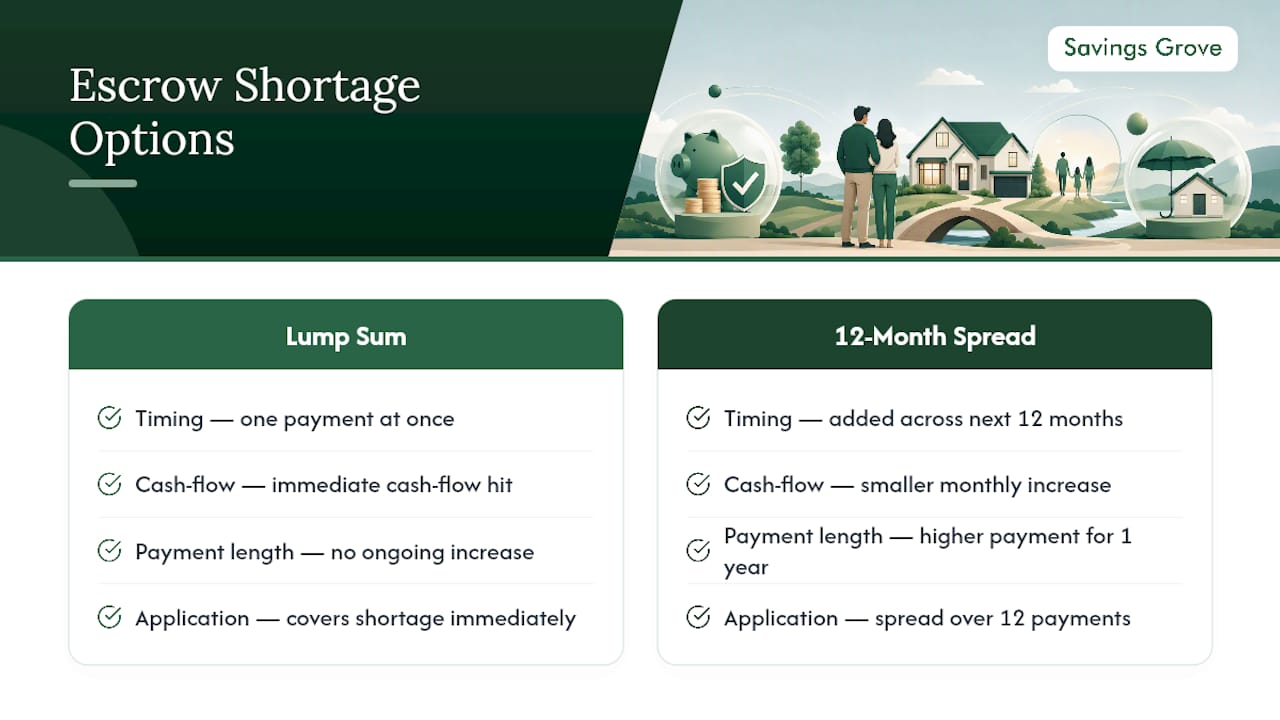
Surpluses work in your favor. If your account holds more than $50 above what it needs, your servicer must refund it to you rather than rolling it forward. Smaller surpluses under that threshold can be applied toward next year’s payments instead.
Pro Tip: Read your annual escrow statement the week it arrives, not months later. Catching a shortage early gives you time to choose the lump-sum option instead of getting stuck with a higher payment for a year.
When You Can Waive or Remove Escrow
Escrow isn’t always mandatory. Whether you can drop it depends on your loan type and how much equity you’ve built.
- Check your loan type first. FHA loans generally require escrow for the life of the loan, while conventional loans often allow waivers once you meet lender criteria.
- Confirm you qualify. Most lenders want at least 20% equity and a clean payment history with no missed or late payments.
- Ask about trade-offs. Some lenders charge a fee or add a small rate increase in exchange for removing escrow, since it shifts risk back to you.
- Contact your servicer directly. Request the waiver in writing, and expect to provide proof of your current tax and insurance payment status.
Your Rights Under RESPA and Federal Escrow Rules
The Real Estate Settlement Procedures Act sets firm boundaries on how servicers manage your escrow money, and knowing them helps you catch mistakes.
- Servicers can collect no more than 1/12 of your annual escrow costs monthly, plus a cushion capped at 1/6 of that annual total
- You should receive an initial escrow statement at settlement or within 45 days of your loan closing
- An annual escrow statement is required within 30 days after your servicer completes its yearly computation
- Servicers must make disbursements on time and keep accurate aggregate accounting of every dollar in your account
If your servicer misses a tax or insurance payment, or you spot a discrepancy on your statement, contact them in writing first and keep a copy. If the issue doesn’t get resolved, you can file a complaint with your state’s financial services regulator or the CFPB. Understanding who actually services your loan helps you know exactly who to contact when something looks off.
Monitoring Your Escrow: Practical Steps
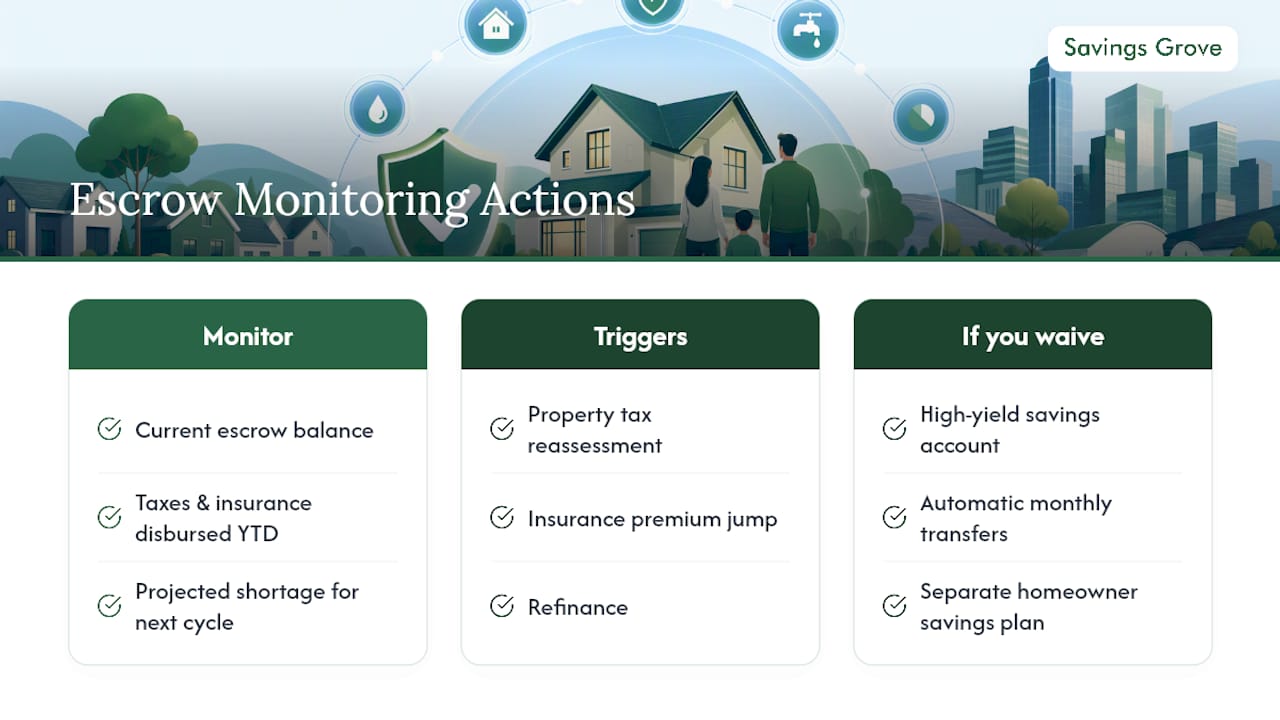
It is recommended to check your online mortgage account every few months, not just when the annual statement arrives. Three numbers matter most: your current escrow balance, the amount disbursed for taxes and insurance year to date, and any projected shortage flagged for the next cycle.
Certain events should trigger you to request an early escrow analysis instead of waiting for the annual one. A property tax reassessment, a jump in your insurance premium, or a refinance are the three biggest ones.
If you waive escrow, replicate its discipline yourself. A high-yield savings account with automatic monthly transfers works well, and a homeowner savings plan keeps the money separate from everyday spending until the bills come due.
Pro Tip: Set your own escrow calendar reminders for tax and insurance due dates, even if a lender is technically handling it. A second set of eyes catches missed payments faster than waiting for a late notice.
Is Escrow Worth It? An Editorial Take
Escrow trades a little control for a lot of peace of mind. You give up the interest you’d earn holding that money yourself, and in most states, servicers aren’t required to pay you interest on it either. What you get in return is one less bill to remember and real protection against a lapsed insurance policy or missed tax payment turning into a lien.
I think escrow makes sense for anyone who’s ever missed a bill during a busy year, and self-managing makes sense for disciplined savers who’d rather earn interest in a separate account. If you’re weighing which camp you fall into, Savings Grove’s homeowner money tips are a good next stop.
— Mika L.
Where to Go for More Homeowner Budgeting Help
Escrow is just one piece of the larger puzzle of managing a mortgage without letting fees or timing quietly eat into your budget. Savings Grove is the resource for homeowners who want that fuller picture without wading through servicer paperwork or regulatory text alone.

Beyond escrow, Savings Grove tracks the details that quietly cost homeowners money, like servicer fees on alternative payment schedules and practical ways to build a home savings cushion before you even close. If you’re weighing whether to keep escrow or waive it, our guide on biweekly mortgage payments and servicer fees breaks down another lever that affects your total payment picture. Visit Savings Grove for the full library of budgeting checklists and homeowner guides built to help you keep more of what you earn.
Sources
CFPB’s escrow account explainer, RESPA’s escrow regulation text, and NY DFS’s escrow guide cover the legal basics directly.
FAQ
What Is an Escrow Account in a U.S. Mortgage?
It’s a servicer-managed account that collects part of your monthly payment to pay property taxes and homeowners insurance on your behalf. The contribution is usually your estimated annual costs divided by 12, plus a small cushion.
Is There a Downside to Having an Escrow Account?
The main downside is losing access to that money and the interest it might otherwise earn if you saved it yourself. You also have less direct control over the timing of tax and insurance payments, though the servicer handles the deadlines for you.
Can I Remove My Escrow Account From My Mortgage?
Often, yes, if you have a conventional loan with at least 20% equity and a clean payment history. FHA and VA loans typically require escrow for the life of the loan, so removal usually isn’t an option there.
Do Banks Make Money Off Your Escrow Account?
Servicers don’t collect interest on escrow the way a savings account earns interest for you, but some states require them to pay borrowers interest on those balances. It’s worth checking your state’s specific rules if you’re curious whether yours applies.