

A 2-1 buydown temporarily cuts your mortgage rate by 2 percentage points in year one and 1 point in year two before it returns to the original note rate in year three. It works best as short-term relief when a seller, builder, or lender covers the cost, or when you genuinely expect your income to climb before the discount runs out. Your first move: ask your lender to show the buydown deposit amount right on your Loan Estimate before you commit.
TL;DR:
- A typical $400,000 loan at 7% requires about $9,000 for a two-year 2-1 buydown, providing roughly $514 monthly savings in year one.
- The buydown is funded through seller concessions, lender contributions, or buyer payments, with funds kept in escrow and disbursed monthly.
- It only reduces payments for two years, with payments returning to the full note rate afterward, offering a short-term cash-flow benefit.
- Long-term owners usually benefit more from a permanent rate reduction or price negotiation rather than a temporary buydown.
- Buyers should compare the buydown cost against alternative options like price cuts or larger down payments for longer-term savings.
Table of Contents
- What is a 2-1 buydown, exactly?
- How the buydown gets funded and paid out
- What does a 2-1 buydown actually cost?
- Pros and cons of a 2-1 buydown
- Quick decision checklist: who should consider a 2-1 buydown?
- Lender and regulatory rules to know
- Alternatives worth comparing
- Your next steps
- Savings Grove’s take: a buydown is a bridge, not a fix
- Sources
- FAQ
What is a 2-1 buydown, exactly?
A 2-1 buydown is a temporary rate reduction, not a change to your actual loan. Your note rate, the rate you’re underwritten and qualified at, stays fixed for the full 30 years.
That’s different from a permanent buydown, where you pay discount points upfront to lower your rate for the life of the loan. A permanent buydown costs more today but keeps paying you back every month for decades. A 2-1 buydown is a short, scheduled discount, more like a rebate spread over 24 months than a real interest rate cut.
How the buydown gets funded and paid out
Someone has to pay for the discount, because the lender still collects the full note rate over the life of the loan. That gap between what you pay and what the lender is owed gets covered by an upfront deposit, usually funded one of these ways:
- Seller or builder concession. This is the most common setup, especially in slower housing markets where sellers would rather subsidize your rate than drop the price.
- Lender-paid buydown. Some lenders fund part of the buydown as a competitive incentive, often tied to a slightly higher note rate elsewhere in the deal.
- Buyer-paid buydown. You can pay for it yourself out of pocket if you expect a raise, bonus, or second income within two years.
The money sits in a dedicated escrow account. Each month, your loan servicer draws the difference between your discounted payment and the full payment from that account and applies it to your loan. You never touch the funds directly. Meanwhile, underwriting doesn’t care about any of this: you’re qualified based on your ability to pay the full note-rate payment, not the discounted one. Check your Loan Estimate and closing disclosure for a line item showing the buydown agreement and deposit amount.
What does a 2-1 buydown actually cost?
Here’s where the math gets real. Take a $400,000 loan at a 7% note rate over 30 years. The full principal and interest payment at 7% runs close to $2,661 a month.
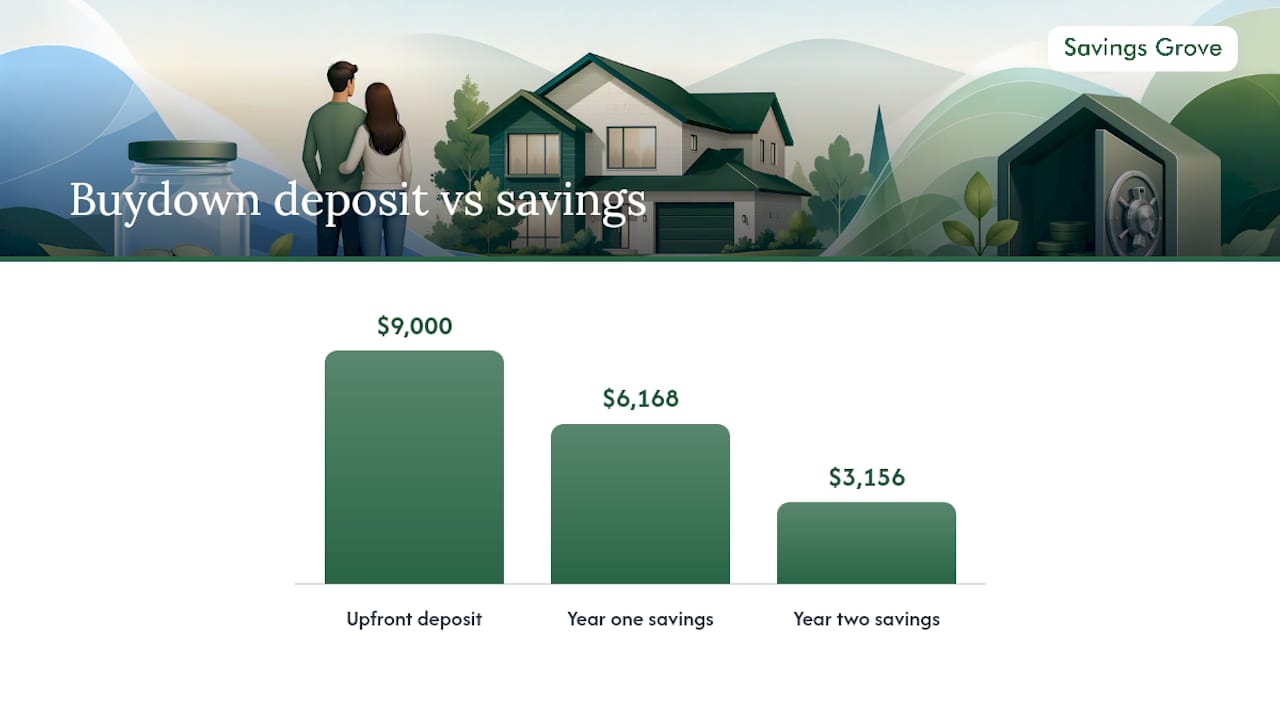
- Year one: rate drops to 5%, payment falls to roughly $2,147. That’s about $514 a month in savings, or roughly $6,168 over the year.
- Year two: rate rises to 6%, payment climbs to about $2,398. Savings shrink to around $263 a month, or roughly $3,156 over the year.
- Year three onward: you pay the full 7% rate and the full $2,661 payment for the remaining life of the loan.
Add those two years of savings together and you land near $9,000 for the total buydown deposit, a figure that lines up with common industry examples for a loan this size.
Statistic Callout: On a $400,000 loan at 7%, a 2-1 buydown typically requires an upfront deposit of roughly $9,000, which funds about $514 a month in year one savings and about $263 a month in year two.
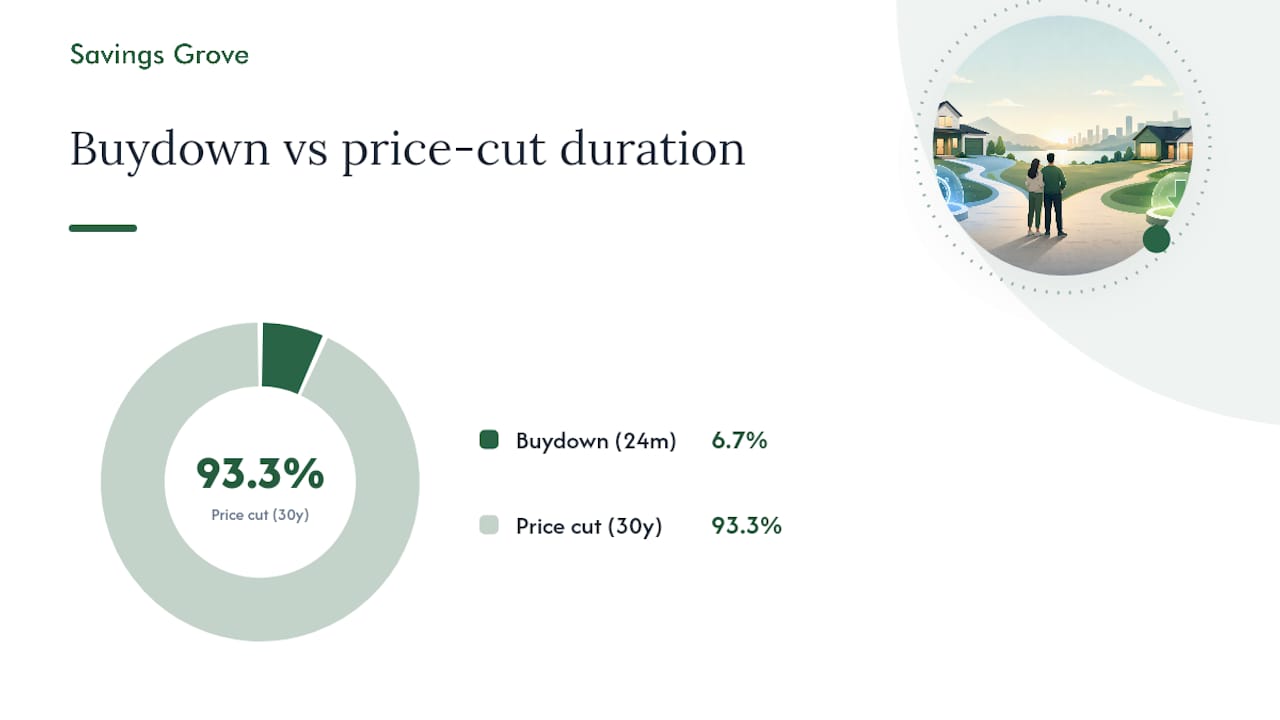
Compare that $9,000 to what a permanent rate reduction would cost. A quarter-point permanent buydown might run $2,000 to $4,000 depending on your lender’s pricing, but it saves you money every single month for 30 years instead of just 24. Run both numbers through a buydown calculator before you decide which one actually serves your holding period.
Pros and cons of a 2-1 buydown
The appeal is obvious in year one. The catch shows up in year three.
Pros:
- Lower payments during the exact window when moving costs, furniture, and repairs tend to hit hardest.
- Predictable, scheduled step-ups, so there’s no surprise about when or how much your payment will rise.
- Often free to you when a seller or builder funds it as part of the deal.
- Useful cash-flow bridge if you’re expecting a raise, bonus, or a second income to kick in.
Cons:
- The discount is temporary. Your payment jumps twice, and the second jump lands you right back at the full note-rate payment.
- It does nothing for your qualifying rate or your long-term interest cost, since underwriting is based on the note rate the whole time.
- If you plan to own the home for more than a few years, a price reduction or permanent buydown often beats a temporary one in total savings.
Pro Tip: Before accepting a seller’s buydown offer, ask what the same dollar amount would do as a straight price reduction instead. On that $9,000 example, a price cut lowers your loan balance and your payment for the full 30 years, while the buydown only helps for 24 months. If you’re staying put long term, the price reduction usually wins.
Quick decision checklist: who should consider a 2-1 buydown?
Run through these four questions before you sign anything:
- Who’s actually paying? If it’s a seller or builder concession, the buydown probably costs you nothing extra to accept. If you’d be funding it yourself, compare it against other uses of that cash first.
- How long do you plan to stay? Buydowns favor buyers who expect to sell or refinance within a few years. Long-term owners usually do better with a permanent rate reduction or a lower price.
- What’s your worst-case year-three payment? Confirm you can comfortably afford the full note-rate payment before the discount disappears, not just the discounted one.
- What else could that money do? Ask whether the same concession dollars applied to your price or closing costs would leave you better off over your expected timeline.
Lender and regulatory rules to know
Temporary buydowns aren’t a free-for-all. Fannie Mae caps the buydown period at three years and limits how fast your portion of the rate can climb, capping increases at no more than 1 percentage point per year.
Fannie Mae also requires a written buydown agreement and full disclosure of the terms before closing, so there’s no ambiguity about when your payment changes. On top of that, buydowns are typically restricted to principal residences and second homes. Investment properties and cash-out refinances usually don’t qualify. And no matter who’s funding the discount, you’re underwritten at the full note rate, not the reduced one, which means the buydown never expands your buying power.
Alternatives worth comparing
A 2-1 buydown is one option among several ways to use negotiation leverage or extra cash. A permanent buydown (paying points to lower your rate for the full loan term) costs more upfront but pays off for owners who plan to stay put. A price reduction funded by the same seller concession permanently lowers your loan balance, which often beats a temporary rate discount over any holding period longer than three or four years, a point worth running through your own numbers before deciding.
An adjustable-rate mortgage offers a lower initial rate too, but with more long-term uncertainty than a fixed-rate loan with a temporary buydown attached. And a larger down payment shrinks your loan balance directly, which lowers your payment permanently without any of the year-three payment jump. As a rule of thumb: short expected ownership favors the buydown, long-term ownership favors the price cut or the bigger down payment.
Your next steps
Start by asking your lender for the exact buydown deposit amount and a year-by-year payment schedule, both should appear on your Loan Estimate. Then model your own numbers before you agree to anything.
- Plug your loan amount, note rate, and term into a buydown calculator to see your actual monthly savings.
- Compare the buydown scenario against a price-reduction scenario using Savings Grove’s guide to building a home buying savings plan.
- Bring your worst-case year-three payment to your budget conversation, not just the discounted year-one number, and check it against smart budgeting habits for new homeowners.
Savings Grove’s take: a buydown is a bridge, not a fix
A 2-1 buydown solves a cash-flow problem, not a rate problem. It’s easy to get seduced by that first-year payment and forget that year three brings the full bill due, whether your income has grown or not. Our advice: underwrite yourself conservatively, assume no raise, no bonus, no rosy scenario, and only treat the buydown as a bonus if things go better than planned. Always get the written agreement in hand before you count on the discount, and use tools like Savings Grove’s down payment savings guide to weigh whether that concession money might serve you better elsewhere.
— Mika L.
Sources
For rules and rate structures, see Fannie Mae’s temporary buydown guidance, Investopedia’s buydown explainer, and Better’s payment-schedule breakdown.
This article is general information, not a substitute for advice from a qualified financial advisor. Consult a qualified financial professional about your own circumstances before acting on anything here.
FAQ
Is it smart to do a 2-1 buydown?
It’s smart when someone else is paying for it, like a seller or builder concession, and you’re confident you can handle the full note-rate payment once year three arrives. It’s riskier when you’re funding it yourself or counting on income growth that isn’t guaranteed.
What is the average cost of a 2-1 buydown?
Cost scales with your loan amount and rate, but a $400,000 loan at 7% typically requires roughly $9,000 to fund the full two-year discount. Ask your lender for the exact deposit figure tied to your specific loan terms.
Can you buy down your interest rate by 2%?
Yes, that’s exactly how a 2-1 buydown works: your rate drops by 2 percentage points in year one, then 1 point in year two, before returning to the original note rate. Fannie Mae caps the annual increase in the borrower’s rate at no more than 1 percentage point per year.
Who pays for a 2-1 buydown?
A seller or builder concession is the most common funding source, often used instead of lowering the sale price. Lenders and buyers can also fund it directly, though buyer-funded buydowns are less common since they add cost without expanding qualifying power.