

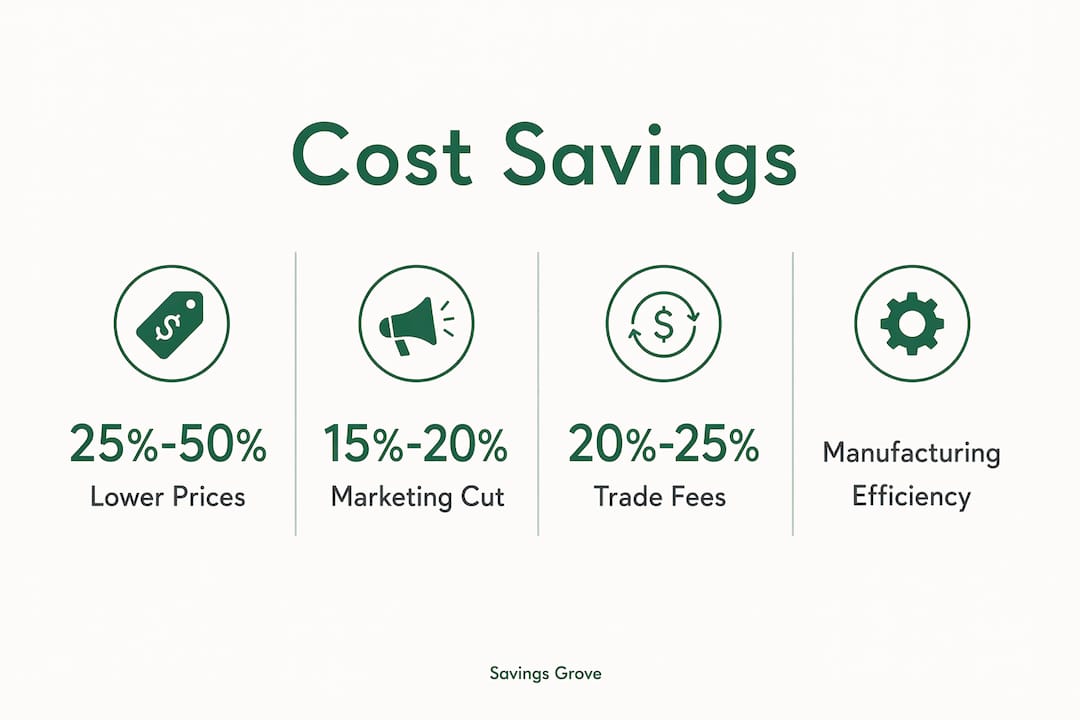
Store brands are private-label products owned and sold exclusively by retailers, priced 25%–50% lower than national name brands because retailers eliminate advertising costs, trade promotion fees, and excess packaging expenses. The average family can save approximately $5,000 yearly by switching to store brands across their regular grocery list. That number is not a rounding error. It reflects a structural cost advantage built into how private-label products are made, marketed, and sold. Understanding why store brands save money gives you a real edge at the checkout line, and this article breaks down exactly how that works.
Why store brands save money: the cost structure explained
Store brands cut costs at three distinct points in the supply chain, and each one directly lowers the price you pay. Marketing accounts for 15%–20% of name brand costs. Trade promotions and slotting fees add another 20%–25%. Manufacturing costs drop by 40%–50% through high-volume, streamlined production. Remove all three, and you have a product that costs a fraction of its branded equivalent.
Name brands spend heavily on national TV campaigns, celebrity endorsements, and retail shelf placement fees. Store brands skip all of that. The retailer already owns the shelf. There is no bidding war for placement, no Super Bowl ad budget to recover, and no middleman taking a cut.
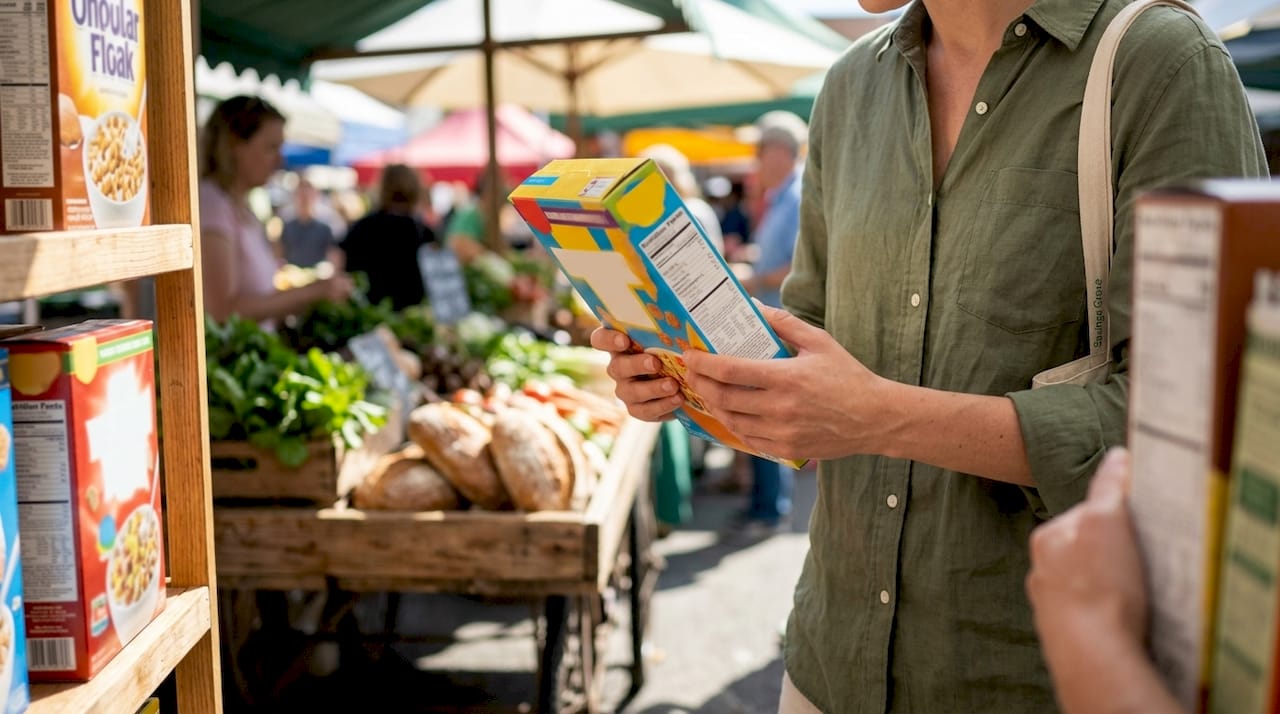
Manufacturing efficiency is the less obvious driver. Retailers contract with large food producers to make store brand products at scale, often on the same production lines used for national brands. That volume drives down the per-unit cost significantly. The retailer then passes a portion of those savings to you while still earning 25%–40% higher gross margins on private-label goods compared to name brands.
Pro Tip: When you see a store brand priced at $1.99 next to a $3.49 name brand, the gap is not a quality signal. It is a marketing budget signal.
| Cost driver | Name brand impact | Store brand impact |
|---|---|---|
| Marketing and advertising | 15%–20% of retail price | Near zero |
| Trade promotions and slotting fees | 20%–25% of retail price | Eliminated |
| Manufacturing costs | Standard per-unit pricing | 40%–50% lower via volume |
| Retailer gross margin | Lower due to brand power | 25%–40% higher on private label |
Are store brands as good as name brands in quality?
Many store brand products come from the same factories as national brands. Same manufacturers and production lines are used for both, meaning the core ingredients and processes are often identical. The label changes. The product frequently does not.
Retailers have a strong financial reason to keep quality high. Their store brand carries their name. A bad product damages the entire store’s reputation, not just one SKU. That accountability pushes retailers to maintain strict quality standards across their private-label lines.
Store brands also adapt faster to consumer health trends. Retailers can rapidly adjust recipes to remove artificial dyes, reduce sodium, or add whole grains without the brand risk that national companies face when reformulating a product millions of people recognize. That flexibility makes store brands more responsive to what shoppers actually want right now.
Consumer confidence in store brands reflects this reality. 92% of U.S. grocery shoppers currently have store brand products at home, and 39% cite quality as a primary purchase driver, not just price. That shift in motivation tells you something important: shoppers are not settling. They are choosing.
Retailers back that confidence with strong return policies. Aldi’s Twice as Nice guarantee and Kroger’s no-questions-asked returns on store brands mean you can try a new product with zero financial risk. If you do not like it, you get your money back.
Pro Tip: Try one store brand item per shopping trip. Use the satisfaction guarantee if it misses. Within a month, you will have identified a dozen reliable swaps that cost you less every week.
Here is what the quality evidence consistently shows:
- Blind taste tests regularly find store brand products equal or preferred over name brand equivalents in categories like pasta, canned vegetables, and dairy.
- Store brand olive oil, flour, and spices often share the same sourcing regions as premium national brands.
- Premium private-label tiers at major retailers now compete directly with specialty and organic name brands on ingredient quality.
- Retailers treat their private-label programs like internal consumer packaged goods companies, with dedicated product development teams and data-driven reformulation cycles.
Which categories give you the biggest store brand savings?
Grocery staples show the most dramatic price gaps between store and name brands. Hydration drinks save up to 74% with store brand options. Ketchup saves 67%. Whole milk saves 61%. Pasta and macaroni and cheese save around 49%. These are products you buy every week, which means the savings compound fast.
The categories where store brands perform best share a common trait: the product is a commodity. Milk is milk. Pasta is pasta. The national brand version adds nothing to the product itself. It adds only the cost of the brand.
Categories where you get the most reliable savings include:
- Pantry staples: flour, sugar, salt, cooking oil, canned tomatoes, and dried beans
- Dairy: milk, butter, shredded cheese, sour cream, and yogurt
- Frozen foods: vegetables, fruit, and basic frozen meals
- Paper and cleaning products: paper towels, trash bags, dish soap, and laundry detergent
- Over-the-counter medications: pain relievers, antacids, and allergy tablets (same active ingredients as name brands, required by FDA standards)
Specialty items are the exception. Artisan cheeses, specific ethnic ingredients, and niche health products sometimes lack a quality store brand equivalent. For those, name brands may still be the better call. The goal is not to replace every item. It is to replace the right items and cut household expenses where the swap costs you nothing in quality.
How to maximize your savings with store brands
Switching to store brands works best as a system, not a one-time decision. These steps help you get the most out of every shopping trip.
-
Start with your highest-frequency items. List the ten products you buy every single week. Check whether a store brand version exists for each one. Swapping even five of those items at a 40% savings rate adds up to hundreds of dollars per year.
-
Shop multiple stores. Different retailers carry different private-label lines at different price points. A store brand pasta sauce at one chain may cost less than the equivalent at another. Checking two or three stores for your staples takes minimal extra time and can meaningfully lower your total bill.
-
Stack store brands with sales. Store brand prices are already lower, but when a store brand item goes on sale, the savings multiply. Combine a sale price with a store loyalty card discount and you are paying a fraction of what the name brand costs at full price.
-
Use satisfaction guarantees freely. Do not let fear of a bad product stop you from trying store brands. Retailers like Aldi and Kroger back their private-label products with full refund policies. Experiment without financial risk.
-
Plan meals around store brand staples. Meal planning with store brand ingredients as the foundation cuts your grocery bill at the planning stage, before you even walk into the store. Build your weekly menu around store brand proteins, grains, and produce, then fill in with name brands only where no comparable option exists.
-
Explore premium private-label tiers. Many major retailers now offer a higher-tier store brand line positioned as a specialty or organic option. These products still cost less than comparable name brand specialty items and often match them in quality. They are worth trying for categories like olive oil, coffee, and snack foods.
Pro Tip: Pair your store brand shopping strategy with a grocery savings guide to find additional ways to cut your bill beyond just swapping labels.
Key Takeaways
Store brands save money because retailers eliminate marketing, trade promotion, and excess manufacturing costs, passing those savings directly to shoppers without sacrificing product quality.
| Point | Details |
|---|---|
| Structural cost savings | Store brands cut marketing (15%–20%), trade fees (20%–25%), and manufacturing costs (40%–50%). |
| Annual household impact | Switching to store brands can save a family approximately $5,000 per year. |
| Quality is comparable | Many store brands use the same factories and ingredients as national brands. |
| Biggest savings categories | Hydration drinks (74%), ketchup (67%), whole milk (61%), and pasta (49%) offer the largest gaps. |
| Risk-free trial | Retailer satisfaction guarantees let you try store brands with a full refund if unsatisfied. |
Store brands have earned their place in my cart
I spent years reaching past the store brand to grab the familiar label, convinced the extra dollar or two was buying me something real. It was not. The turning point for me was a side-by-side taste test with canned tomatoes. The store brand version was indistinguishable from the name brand I had been buying for a decade. That one swap saves me money every single week.
What I find most interesting about the current moment is that the quality argument against store brands has largely collapsed. Retailers now run private-label programs with the same rigor as major consumer packaged goods companies. They have dedicated product teams, consumer testing panels, and fast reformulation cycles. The store brand olive oil at a major grocery chain is not a compromise. It is a deliberate product decision backed by real investment.
The 92% household penetration figure tells the real story. Store brands are not a niche choice for budget shoppers anymore. They are the mainstream choice for people who pay attention to what they spend. The shoppers still avoiding store brands are often paying a premium for a logo, not a better product.
My honest advice: treat store brands as your default and name brands as the exception. Flip the script from how most people shop. You will spend less, eat just as well, and have more money left for the things that actually matter to your budget.
— Mika L.
How Savings Grove helps you spend less at the grocery store
Savings Grove brings together the research, strategies, and up-to-date guides that cost-conscious shoppers need to make every dollar count.
The Savings Grove team regularly updates resources on smart grocery strategies so you always have current, practical information at hand. Whether you are building a store brand shopping list for the first time or looking to tighten an already-lean grocery budget, Savings Grove covers the full picture. From credit card rewards that work at grocery stores to budgeting frameworks that fit real life, the site gives you tools that produce real results. Visit Savings Grove to put your grocery savings plan into practice today.
FAQ
Why are store brands cheaper than name brands?
Store brands eliminate marketing, advertising, and trade promotion costs that add 35%–45% to name brand prices. Retailers also produce private-label goods at high volume, cutting manufacturing costs by up to 50%.
Do store brands use the same ingredients as name brands?
Many store brand products are made in the same factories and with similar or identical ingredients as national brands. Retailers have strong quality incentives because their store’s reputation depends on the products they put their name on.
Which grocery items save the most with store brands?
Hydration drinks save up to 74%, ketchup saves 67%, whole milk saves 61%, and pasta saves around 49% when you choose store brands over national equivalents.
Is it safe to buy store brand over-the-counter medications?
Store brand medications contain the same active ingredients as name brand versions and meet the same FDA standards. The price difference reflects packaging and marketing costs, not ingredient quality.
How much can a family save by switching to store brands?
A family that consistently chooses store brands over national brands can save approximately $5,000 per year, based on typical item savings of 25%–50%.
0 comments
Leave a comment
Reviewed before they appear. Your email is not shown.