

The most effective discount shopping strategy combines five core methods in a specific order: store coupon → promo code → gift card → cashback activation → rewards card payment. Applying them in that sequence on a single purchase is how you stack savings instead of settling for just one layer. Shoppers who track prices and stack cashback with coupons can realistically achieve 15–25% savings on most purchases, with big-ticket items during sales sometimes offering 30–50% discounts.
Here are the primary types of discount shopping methods at a glance:
- Coupons and promo codes — instant price cuts at checkout
- Cashback portals and apps — earn money back after purchase
- Loyalty and membership programs — points, tiers, and member pricing
- Price tracking and alerts — buy only when the price hits your target
- Clearance, open-box, and refurbished — deep discounts on lightly used or overstocked items
- Discounted gift cards — pay less than face value before you even shop
- Price-matching and negotiation — get a competitor’s lower price at your preferred store
- Time-limited and seasonal sales — Black Friday, end-of-season, and flash events
- Student, senior, and employee discounts — identity-based savings often overlooked
- Payment-based savings — credit card rewards and store-branded cards
Pro Tip: Set up a secondary email address just for promotional newsletters. Many retailers send 10–20% discounts to new subscribers, and a separate inbox keeps those offers organized without cluttering your main account. Also, disable your ad blocker before clicking through a cashback portal so the tracking cookie fires correctly.
Table of Contents
- What are the main types of discount shopping methods?
- How do you use discount methods without overspending?
- Advanced tactics and common pitfalls that erase savings
- How do you build a 90-day discount shopping habit?
- Why you can trust this guide
- Key Takeaways
- The discount method most people underuse
- Savings Grove makes discount shopping easier
- Useful sources and further reading
What are the main types of discount shopping methods?
These methods fall into five practical groups. Knowing which group fits your situation helps you choose fast.
Online tactics
- Promo codes — alphanumeric strings entered at checkout for a flat dollar amount, percentage off, or free shipping. Find them through retailer emails, coupon aggregator sites like RetailMeNot and Coupons.com, or browser extensions like Honey and Capital One Shopping that test codes automatically.
- Browser coupon extensions — low-effort tools that scan and apply codes at checkout. They save time, though some collect browsing data, so read the privacy terms.
- Cashback portals — sites like Rakuten and TopCashback act as affiliates; when you click through to a retailer, the portal earns a commission and shares part of it with you. Rates vary by store and category.
- Email sign-up discounts — first-purchase offers of 10–20% are standard at most major retailers. Use your secondary promo email to collect these without inbox clutter.
- Abandoned-cart discounts — add items to your cart, close the browser, and wait. Many retailers send a 10–20% recovery coupon within 24–48 hours.
In-store tactics
- Manufacturer coupons combined with store sales — stacking both on a single grocery item can cut the price dramatically. Unit-price math confirms whether the larger size or the sale item is the true bargain.
- Clearance and open-box items — end-of-season racks and certified refurbished electronics often carry full warranties at a fraction of the original price.
- Visual search and showrooming — photograph an item in-store with a shopping app and compare prices online instantly. AARP notes this blurs offline and online price discovery and is one of the most efficient ways to verify market value.
Loyalty and membership
- Store loyalty programs — free to join at most grocery stores, pharmacies, and clothing retailers; points accumulate toward discounts or free items.
- Membership clubs — Costco and similar warehouse clubs charge an annual fee but offer bulk pricing that typically outpaces the membership cost for households that shop regularly.
- Subscription discounts — services like Amazon Prime bundle shipping savings, streaming, and member-only deals into one annual fee.
Payment-based savings
- Rewards credit cards — earn 1–5% back on purchases; pay the balance in full each month or interest charges erase the benefit.
- Store-branded cards — higher rewards rates at a specific retailer, useful if you shop there often.
- Discounted gift cards — buy a $50 gift card for $45 on a verified resale platform and save before you even add items to your cart.
Timing and seasonal strategies
| Product Category | Typical Savings | Best Timing |
|---|---|---|
| Electronics | Significant discounts possible with price alerts | Black Friday, post-holiday, back-to-school |
| Groceries/everyday | Savings available with coupons and sales | Weekly store sales cycles |
| Apparel | Notable end-of-season discounts | January, July clearance events |
Pro Tip: Set price alerts 20–40% below the current price for electronics and 10–20% below for everyday items. That threshold filters out minor fluctuations and signals a genuinely meaningful drop.

Watch out for the free-shipping trap. Fidelity warns that free-shipping thresholds and “buy more to save more” offers routinely push shoppers to spend more than planned. A discount only creates real value when it applies to something you already intended to buy.
How do you use discount methods without overspending?
Follow this checklist every time you shop, online or in-store.
- Set a price target — decide the maximum you will pay before you search.
- Activate cashback — click through your portal first, then open the retailer’s site in the same browser session. Disable ad blockers so the tracking cookie registers.
- Apply store coupons — clip digital coupons in the retailer’s app before checkout.
- Test promo codes — use a browser extension or check RetailMeNot; apply the best code.
- Use a discounted gift card — if you bought one, apply it now.
- Pay with a rewards card — the final layer adds 1–5% back on whatever remains.
The order matters because some discounts calculate off the original price, not the already-reduced price. Applying a percentage coupon before a gift card maximizes the dollar value of the coupon.
Traps to avoid:
- Spending an extra $15 to hit a $50 free-shipping threshold when shipping would have cost $6.
- Buying a “buy two, get one free” deal on items you would not have purchased otherwise.
- Using buy-now-pay-later to chase a discount — the installment structure can obscure total cost and encourage impulse spending.
Quick validation checks before you buy: calculate total cost including shipping and tax, confirm the return policy covers your situation, and verify the seller’s rating if purchasing from a marketplace.
Pro Tip: For any purchase over $100, run a quick calculation using a financial calculator to confirm the stacked discount genuinely beats the next-best alternative, especially when rebates have delayed payout windows.
Advanced tactics and common pitfalls that erase savings
Experienced shoppers do four things differently: they use cashback portals consistently, apply visual search in-store, run unit-price math on every grocery buy, and follow stacking discipline every single time.
How cashback portal tracking works: the portal plants a cookie when you click through. If you open a new tab, switch browsers, or have an ad blocker active, the cookie may not fire and your cashback will not register. Complete the entire checkout in the same browser session.
The abandoned-cart play: add items to your cart, close the browser, and wait up to 48 hours. This works best on non-urgent purchases where you can afford to wait. It does not work reliably on limited-inventory items.
Red flags that erase apparent savings:
- Expired or counterfeit promo codes that waste checkout time or, worse, redirect to phishing pages.
- Third-party gift cards from unverified sellers — stick to reputable resale platforms with buyer guarantees.
- Rebates with 8–12 week payout windows on low-value items where the effort rarely pays off.
- Buy-now-pay-later plans used to afford a “deal” — if you need financing to buy it, the discount is not saving you money.
Pro Tip: Before using any promo code from an unfamiliar site, verify it on the retailer’s official page or a well-known aggregator. A code that requires you to create an account or enter payment details before revealing the discount is a red flag.
How do you build a 90-day discount shopping habit?
Follow this short plan to add consistent savings habits without overhauling your routine.
| Timeframe | Key Actions | Expected Effort | Likely Savings Impact |
|---|---|---|---|
| Days 1–30 | Set price alerts, create secondary email, install one coupon extension, join one loyalty program | Low (1–2 hours) | Immediate on next purchase |
| Days 31–60 | Add cashback portal, test abandoned-cart tactic, try price-matching on one mid-size buy, purchase discounted gift cards for recurring expenses | Moderate (30 min/week) | 15–20% on targeted purchases |
| Days 61–90 | Evaluate rewards card alignment, automate alerts, track realized savings in a spreadsheet or app | Low ongoing | Compounding across categories |
Grocery-focused shopper (days 31–60 example): combine manufacturer coupons with the weekly store sale, use a cashback app for receipt scanning, and check grocery savings strategies to layer unit-price math on top. The result is consistent savings on your highest-frequency spending category.
Occasional big-ticket buyer: set a price alert 30% below the current price for the item you want, buy a discounted gift card in advance, and time the purchase for a major sale event. Stacking those three layers on electronics or appliances is where the 30–50% savings range becomes realistic.
- Start with the easiest win: the secondary promo email and one cashback portal take under 10 minutes to set up.
- Track every realized saving, even small ones. Seeing the total motivates consistency.
- Review your rewards card once at the 90-day mark to confirm it still matches your top spending categories.
Pro Tip: Pair this plan with budgeting habits that track where your money goes. Discount methods work best when you already know your baseline spending.
Why you can trust this guide
Savings Grove publishes monthly updates on financial products and strategies, with each guide fact-checked against primary consumer-finance sources before publication.
Sources used in this article:
- Fidelity — consumer financial education on online shopping traps and free-shipping pitfalls.
- AARP — consumer-advocate research on visual search and smart shopping techniques for U.S. shoppers.
- Karmanow — practitioner-level guidance on price-alert thresholds and cashback portal mechanics.
- SavingsRush — practical detail on abandoned-cart timing and secondary email tactics.
- Smart Wallet Saver — unit-price math and coupon-stacking for groceries and household items.
This guide applies to U.S. shoppers. Discount availability, coupon policies, and cashback rates vary by retailer and region. Using coupons as intended is legal and encouraged; coupon fraud (counterfeiting, misredemption, or barcode manipulation) is a federal offense under U.S. law. Always use discount methods ethically and verify codes through official or reputable sources.
This article covers U.S.-based programs, tools, and retailers. Readers outside the U.S. should verify local availability before applying specific recommendations.
Pro Tip: When using cashback portals, review your privacy settings periodically. Portals rely on tracking cookies, and understanding what data they collect helps you make an informed choice about which ones to use.
Key Takeaways
Stacking discounts in the right order — store coupon, promo code, gift card, cashback portal, then rewards card payment — is the single most reliable way to maximize savings on any purchase.
| Point | Details |
|---|---|
| Stack in the right order | Apply discounts as: store coupon → promo code → gift card → cashback → rewards card. |
| Set price alerts early | Target 20–40% below current price for electronics, 10–20% for everyday items. |
| Use a secondary promo email | Capture 10–20% new-subscriber discounts without cluttering your main inbox. |
| Avoid free-shipping traps | Never spend extra just to hit a threshold; compare the threshold cost to actual shipping. |
| Savings Grove resources | Savings Grove offers monthly-updated guides, curated deals, and budgeting tools to support every step. |
Pro Tip: Review your easy ways to save money checklist quarterly to make sure your discount habits still match your current spending patterns.
The discount method most people underuse
Most shoppers pick one method and stop there. They use a coupon or they wait for a sale, but they rarely combine three or more layers on the same purchase. The stacking sequence covered in this guide is not complicated, but it does require a small habit shift: you have to start the process before you open the retailer’s website, not after you have already added items to your cart.
The most reliable starting point for most readers is this combination: a secondary promo email for new-subscriber discounts, one cashback portal activated before every online purchase, and a rewards credit card paid in full each month. Those three steps alone cover the majority of savings opportunities without requiring significant time or technical skill.
One note on ethics: discount methods work because retailers and brands budget for them as marketing costs. Using them as intended is entirely legitimate. Generating counterfeit codes, misrepresenting eligibility for student or senior discounts, or manipulating cashback tracking crosses into fraud. Keep it straightforward and the savings are real.
Savings Grove makes discount shopping easier
Sorting through dozens of discount methods, cashback portals, and rewards cards on your own takes time you may not have. Savings Grove cuts through that by publishing monthly-updated guides, curated credit card comparisons, and practical money-saving resources built specifically for U.S. consumers who want real results without the guesswork.
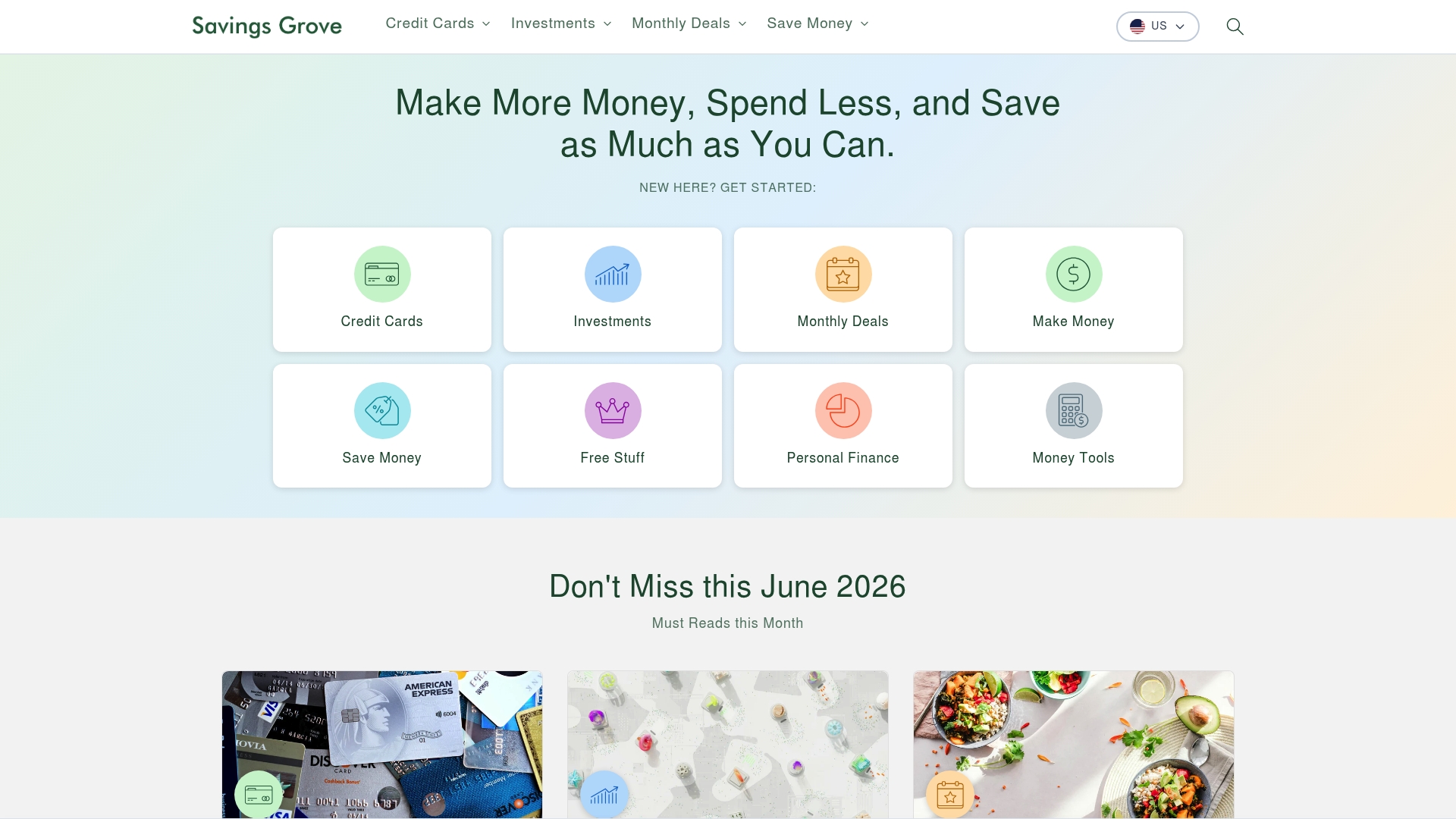
Whether you are building your first discount habit or refining a stacking strategy for big-ticket purchases, Savings Grove’s guides cover the full range, from grocery savings hacks to credit card rewards optimization. You also get access to a home insurance discounts checklist that shows how bundling and membership discounts extend well beyond retail shopping into household expenses.
Visit Savings Grove to browse the full library of guides and find the resources that match where you are right now.
Useful sources and further reading
- Fidelity: 10 Online Shopping Tips — Covers free-shipping traps, browser extension use, and the “buy-more” mentality. Authoritative consumer-finance source.
- AARP: Tips to Shop Smarter and Save — Consumer-advocate guidance on visual search, showrooming, and price verification for U.S. shoppers.
- Karmanow: Save Money Shopping Online — Detailed breakdown of price-alert thresholds, cashback portal mechanics, and realistic savings ranges.
- SavingsRush: Smart Shopping Guide — Practical detail on abandoned-cart timing, secondary email setup, and new-subscriber discount capture.
- Smart Wallet Saver: Money-Saving Hacks — Unit-price math, coupon stacking for groceries, and clearance timing strategies.
- Help.com: Smart Shopping Strategies — Browser extension recommendations with honest notes on data-collection trade-offs.
Note: cashback portal rates and retailer coupon policies change frequently. Verify current terms directly with each platform before relying on specific rates. Monitor your browser’s cookie settings when using cashback portals, and review each portal’s privacy policy to understand what data is collected.
0 comments
Leave a comment
Reviewed before they appear. Your email is not shown.